



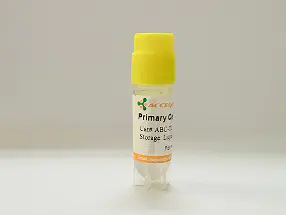
For research use only
| Cat No. | ABC-TC3133 |
| Product Type | Bovine Primary Cells |
| Cell Type | Endothelial |
| Species | Bovine |
| Growth Conditions | 37 ℃, 5% CO2 |
| Source Organ | Pulmonary Artery |
| Disease | Normal |
| Storage | Liquid Nitrogen |
Bovine large artery endothelial cells are derived from the arteries of USDA-inspected cattle.
Bovine Pulmonary Artery Endothelial Cells (BPAECs) are isolated from bovine pulmonary arteries. Morphologically, BPAECs are usually flat, with cells tightly arranged to form a characteristic “pebblestone” monolayer structure. BPAECs play an important role in maintaining vascular permeability, regulating vascular tension, participating in inflammatory responses, and blood circulation homeostasis. They regulate vasoconstriction and relaxation and maintain pulmonary circulation pressure balance by secreting active substances such as nitric oxide (NO) and prostacyclin. In addition, BPAECs are also involved in vascular remodeling and angiogenesis in bovine pulmonary vessels. The cells undergo rigorous screening and isolation procedures, and are rigorously tested to ensure they are free of contamination from HIV-1, HBV, HCV, Syphilis, Mycoplasma, Fungi, Yeast, and Bacteria.
| Product Code | Bovine Pulmonary Artery Endothelial Cells,Pulmonary Artery Endothelial Cells,PAECs,ECs,BPAECs |
| Species | Bovine |
| Cat.No | ABC-TC3133 |
| Product Category | Primary Cells |
| Size/Quantity | 1 vial |
| Cell Type | Endothelial |
| Growth Mode | Adherent |
| Shipping Info | Dry Ice |
| Growth Conditions | 37 ℃, 5% CO2 |
| Source Organ | Pulmonary Artery |
| Disease | Normal |
| Biosafety Level | 1 |
| Storage | Liquid Nitrogen |
| Product Type | Bovine Primary Cells |
| Quality Control | All cells test negative for mycoplasma, bacteria, yeast, and fungi. |
Bovine Pulmonary Artery Endothelial Cells are suitable for investigating how various stimuli or compounds influence endothelial cell behaviors, such as changes in cell viability, barrier function, and the production of inflammatory mediators. They can also be used to study fundamental endothelial processes—including substance transport and signal transduction—providing a cellular model for exploring mechanisms that regulate vascular homeostasis.
When you publish your research, please cite our product as “AcceGen Biotech Cat.# XXX-0000”. In return, we’ll give you a $200 coupon. Simply click here and submit your paper’s PubMed ID (PMID).