



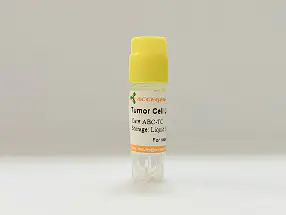
For research use only
| Cat No. | ABC-TC0103 |
| Product Type | Mouse Breast Cancer Cell Lines |
| Species | Mouse, DBA |
| Growth Conditions | 37 ℃, 5% CO2 |
| Disease | Malignant Neoplasms |
| Product Code | Ca D2, Ca-D2, cad2 |
In vitro established form the CaD2 carcinoma, tested and found negative for MAP-test.The species was confirmed by Real-Time PCR
CaD2 cells are a murine mammary gland carcinoma line derived from a spontaneous tumor in a six-month-old female C3H mouse. They exhibit epithelial-like morphology and adhere strongly to culture surfaces, enabling reliable in vitro propagation. Functional analysis has demonstrated that CaD2 tumors respond selectively to photodynamic therapy (PDT)—highlighting their relevance in preclinical therapeutic testing. Additionally, early immunotherapy studies showed that co-administration of killed Corynebacterium parvum could inhibit CaD2 tumor formation, underscoring its immunogenic potential of this model and its utility in immune-oncology research. While detailed mutational and receptor profiling remain limited, CaD2 is a well-characterized syngeneic murine model for studying mammary carcinoma pathogenesis, tumor-immune interactions, and various treatment strategies. The cells undergo stringent screening and testing procedures to ensure they are free from contamination by Mycoplasma, fungi, yeast, and bacteria.
| Product Code | Ca D2, Ca-D2, cad2 |
| Species | Mouse, DBA |
| Cat.No | ABC-TC0103 |
| Product Category | Tumor Cell Lines |
| Size/Quantity | 1 vial |
| Shipping Info | Dry Ice |
| Growth Conditions | 37 ℃, 5% CO2 |
| Disease | Malignant Neoplasms |
| Biosafety Level | 1 |
| Storage | Liquid Nitrogen |
| Product Type | Mouse Breast Cancer Cell Lines |
CaD2 cells provide a robust syngeneic mouse model for studying photodynamic therapy in breast cancer, including investigations into photosensitizer localization, light fractionation strategies and treatment-induced immune responses. Their responsiveness to microbial immunomodulators, such as C. parvum, offers a platform to examine anti-tumor immune activation and combination immunotherapies. Researchers can employ CaD2 in transplantation models to explore tumor microenvironment interactions, inflammatory signaling, and therapeutic outcomes in vivo. Furthermore, their epithelial phenotype and predictable growth kinetics make them suitable for screening novel anti-cancer drugs, phototherapeutic compounds, or immunostimulatory agents in preclinical settings.
When you publish your research, please cite our product as “AcceGen Biotech Cat.# XXX-0000”. In return, we’ll give you a $200 coupon. Simply click here and submit your paper’s PubMed ID (PMID).