



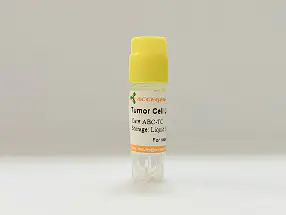
For research use only
| Cat No. | ABC-TC0124 |
| Product Type | Mouse Sarcoma Cell Lines |
| Cell Type | Fibroblast |
| Species | Mouse |
| Growth Conditions | 37 ℃, 5% CO2 |
| Disease | Sarcoma |
| Product Code | CCRF S 180 II; S-180 II; CCRF S-180; S-180; S180; Sarcoma-180; Sarcoma 180; CCRF-180II |
CCRF S-180 II is suitable for oncology research, drug efficacy evaluation, and chemotherapeutic screening using established mouse sarcoma tumor model.
CCRF S-180 II is a mouse fibrosarcoma cell line derived from a spontaneous tumor in a Swiss Webster (CFW) mouse. These cells exhibit a fibroblastic morphology and adherent growth. Cytogenetic analysis shows a stable diploid karyotype with 2n = 40 chromosomes, indicating chromosomal stability. Gene expression studies show that CCRF S-180 II cells express high levels of extracellular matrix components such as collagen type I (COL1A1) and fibronectin, as well as growth factors like TGF-β1 and FGF2, which are involved in tumor progression and metastasis. These characteristics make the cell line a valuable model for studying tumor biology, metastasis, and the tumor microenvironment. CCRF S-180 II forms solid tumors when injected subcutaneously into syngeneic mice, making it suitable for in vivo tumorigenesis studies. The cells undergo rigorous screening and isolation procedures, and are rigorously tested to ensure they are free of contamination from mycoplasma, fungi, yeast, and bacteria.
| Product Code | CCRF S 180 II; S-180 II; CCRF S-180; S-180; S180; Sarcoma-180; Sarcoma 180; CCRF-180II |
| Species | Mouse |
| Cat.No | ABC-TC0124 |
| Product Category | Tumor Cell Lines |
| Size/Quantity | 1 vial |
| Cell Type | Fibroblast |
| Growth Mode | Adherent |
| Shipping Info | Dry Ice |
| Growth Conditions | 37 ℃, 5% CO2 |
| Disease | Sarcoma |
| Biosafety Level | 1 |
| Storage | Liquid Nitrogen |
| Product Type | Mouse Sarcoma Cell Lines |
CCRF S-180 II cells are widely used in cancer research, particularly in studies of tumor progression, metastasis, and the tumor microenvironment. They serve as a model for investigating the role of extracellular matrix components and growth factors in tumor biology. The cell line is also utilized for screening anti-cancer agents and evaluating therapeutic strategies targeting the tumor microenvironment. Their chromosomal stability and gene expression profile make them a reliable tool for preclinical studies in oncology.
When you publish your research, please cite our product as “AcceGen Biotech Cat.# XXX-0000”. In return, we’ll give you a $200 coupon. Simply click here and submit your paper’s PubMed ID (PMID).