



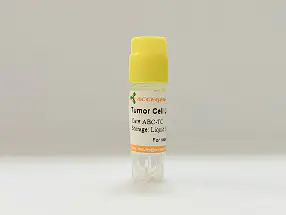
For research use only
| Cat No. | ABC-TC0009 |
| Product Type | Mouse Sarcoma Cell Lines |
| Species | Mouse – NIH Swiss |
| Growth Conditions | 37 ℃, 5% CO2 |
| Source Organ | Embryo |
| Disease | Normal |
| Product Code | 3 J1, 3J-1, 3j1 |
3J1 Cell Line transformed with H-ras(EJ) for fibrosarcoma research, tumorigenic potential assays, and testing cancer-related signal pathway inhibitors.
3J1 is a non-metastasizing mouse embryonal fibrosarcoma cell line generated by transfecting NIH3T3 cells with the activated H-ras (EJ) oncogene. The parental NIH3T3 line was originally derived from Swiss NIH mouse embryo fibroblasts and displays fibroblast-like morphology. Upon oncogenic transformation, 3J1 cells acquired enhanced proliferative capacity and tumorigenic properties. The cells grow as adherent monolayers in vitro and exhibit rapid proliferation under standard culture conditions. Karyotype analysis reveals typical murine chromosomal structures with numerical and structural abnormalities associated with ras-induced transformation. 3J1 is tumorigenic in immunodeficient mice, forming localized fibrosarcoma-like masses without distant metastasis. The cells undergo rigorous screening and isolation procedures, and are rigorously tested to ensure they are free of contamination from Mycoplasma, Fungi, Yeast, and Bacteria.
| Product Code | 3 J1, 3J-1, 3j1 |
| Species | Mouse – NIH Swiss |
| Cat.No | ABC-TC0009 |
| Product Category | Tumor Cell Lines |
| Size/Quantity | 1 vial |
| Shipping Info | Dry Ice |
| Growth Conditions | 37 ℃, 5% CO2 |
| Source Organ | Embryo |
| Disease | Normal |
| Biosafety Level | 1 |
| Storage | Liquid Nitrogen |
| Product Type | Mouse Sarcoma Cell Lines |
3J1 serves as a well-characterized model for studying H-ras-driven oncogenesis, mesenchymal tumor development, and non-metastatic fibrosarcoma biology. It is commonly used in research on signal transduction, tumor suppressor gene screening, anchorage-independent growth, and pharmacologic inhibition of RAS/MAPK pathways. Its stability and responsiveness to pathway modulators make it valuable in functional genomics and preclinical compound screening.
When you publish your research, please cite our product as “AcceGen Biotech Cat.# XXX-0000”. In return, we’ll give you a $200 coupon. Simply click here and submit your paper’s PubMed ID (PMID).