



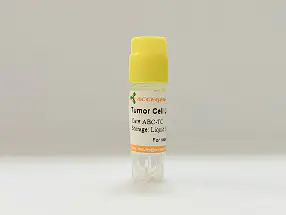
For research use only
| Cat No. | ABC-TC0096 |
| Product Type | Mouse Sarcoma Cell Lines |
| Cell Type | Fibroblast |
| Species | Mouse – Embryo, Mus Musculus |
| Growth Conditions | 37 ℃, 5% CO2 |
| Source Organ | Embryo |
| Disease | Sarcoma |
| Product Code | C3H/10T1/2-clone8; C3H/10T1/2 CL8; C3H10T1/2 clone8; C3H10T1/2CL8; 10T1/2(clone8); 10T1/2; C3H10T1-2; C3H10T1/2; C3H-10T1/2; C3H 10T1/2; C3H/10T1/2 |
Contact sensitive; No detectable background spontaneous transformation; Highly susceptible to transformation by chemical agents
C3H/10T1/2, Clone 8 is a mouse embryonic fibroblast cell line derived from C3H mouse embryos. It was originally established for its stable diploid karyotype and characteristic fibroblast-like morphology. These adherent cells grow as monolayers and exhibit contact inhibition under standard conditions. However, upon exposure to chemical carcinogens or oncogenes, C3H/10T1/2 cells are highly susceptible to neoplastic transformation, making them a classic model for studying multistage carcinogenesis and mesenchymal cell differentiation. Cytogenetic analyses confirm a near-diploid chromosome number. While not spontaneously tumorigenic, transformed derivatives of Clone 8 can form tumors in vivo, serving as a bridge between in vitro transformation assays and in vivo tumorigenesis studies. The cells undergo stringent screening and testing procedures to ensure they are free from contamination by Mycoplasma, fungi, yeast, and bacteria.
| Product Code | C3H/10T1/2-clone8; C3H/10T1/2 CL8; C3H10T1/2 clone8; C3H10T1/2CL8; 10T1/2(clone8); 10T1/2; C3H10T1-2; C3H10T1/2; C3H-10T1/2; C3H 10T1/2; C3H/10T1/2 |
| Species | Mouse – Embryo, Mus Musculus |
| Cat.No | ABC-TC0096 |
| Product Category | Tumor Cell Lines |
| Size/Quantity | 1 vial |
| Cell Type | Fibroblast |
| Growth Mode | Adherent |
| Shipping Info | Dry Ice |
| Growth Conditions | 37 ℃, 5% CO2 |
| Source Organ | Embryo |
| Disease | Sarcoma |
| Biosafety Level | 1 |
| Storage | Liquid Nitrogen |
| Product Type | Mouse Sarcoma Cell Lines |
C3H/10T1/2, Clone 8 is extensively used as a mechanistic model for chemical- and radiation-induced carcinogenesis, particularly in soft tissue sarcoma and mesenchymal lineage transformation research. It enables studies on oncogene function, DNA damage responses, and environmental mutagen screening. In tissue engineering, Clone 8 cells are valued for exploring fibroblast-to-myofibroblast transition and extracellular matrix remodeling, and interactions involved in fibrosis and tumor-stroma crosstalk. These C3H 10T1/2 applications make it a versatile platform for drug testing, toxicology, and mechanistic investigation. Additionally, numerous C3H 10T1/2 research studies utilize this line to dissect signaling pathways, cellular differentiation, and transformation processes in mesenchymal cells.
When you publish your research, please cite our product as “AcceGen Biotech Cat.# XXX-0000”. In return, we’ll give you a $200 coupon. Simply click here and submit your paper’s PubMed ID (PMID).