



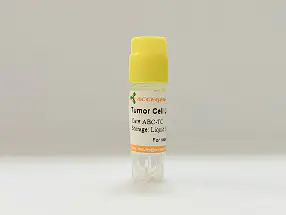
For research use only
| Cat No. | ABC-TC0196 |
| Product Type | Human Skin Cell Lines |
| Cell Type | Fibroblast |
| Species | Human |
| Growth Conditions | 37 ℃, 5% CO2 |
| Product Code | Cri-du-Chat, CriduChat |
Human Caucasian skin deletion in chromosome 5. Derived from the skin of an adult female Caucasian with Cri du Chat syndrome.
The Cri du Chat cell line is derived from a Caucasian individual with Cri-du-chat syndrome (5p deletion syndrome). They express key markers, including vimentin (a mesenchymal cell marker) and collagen type I. Karyotype analysis reveals a terminal deletion of the short arm of chromosome 5 (5p-), with the deletion size varying among cases but typically encompassing critical regions like 5p12-5p13. These cells demonstrate reduced proliferative capacity and altered gene expression profiles due to haploinsufficiency of genes such as TERT (telomerase reverse transcriptase), which is crucial for telomere maintenance. Each lot undergoes rigorous screening and isolation procedures, and is rigorously tested to ensure it is free of contamination from HIV-1, HBV, HCV, Syphilis, Mycoplasma, Fungi, Yeast, and Bacteria.
| Product Code | Cri-du-Chat, CriduChat |
| Species | Human |
| Cat.No | ABC-TC0196 |
| Product Category | Tumor Cell Lines |
| Size/Quantity | 1 vial |
| Cell Type | Fibroblast |
| Shipping Info | Dry Ice |
| Growth Conditions | 37 ℃, 5% CO2 |
| Biosafety Level | 1 |
| Storage | Liquid Nitrogen |
| Product Type | Human Skin Cell Lines |
Cri du Chat cell line finds significant applications in biomedical research and disease modeling. As an in vitro model, it enables the investigation of molecular and cellular mechanisms underlying Cri-du-chat syndrome, particularly those related to the 5p deletion. Researchers utilize this cell line to study gene expression changes, identify key genes contributing to the syndrome’s phenotype, and explore potential therapeutic targets.
When you publish your research, please cite our product as “AcceGen Biotech Cat.# XXX-0000”. In return, we’ll give you a $200 coupon. Simply click here and submit your paper’s PubMed ID (PMID).