



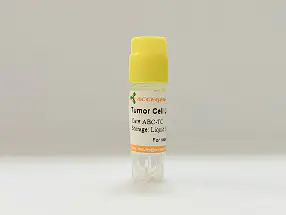
For research use only
| Cat No. | ABC-TC0220 |
| Product Type | Human Oral Cell Lines |
| Cell Type | Epithelial |
| Species | Human |
| Growth Conditions | 37 ℃, 5% CO2 |
| Source Organ | Tongue |
| Disease | Oral Epithelial Dysplasia |
| Product Code | Dysplastic Oral Keratinocyte |
The DOK cell line is a human model for the docking protein research, intracellular signaling studies, and functional molecular pathway assays.
The DOK (Dysplastic Oral Keratinocyte) cell line was isolated from a piece of the dorsal tongue of a 57-year-old man who was a heavy smoker. This cell line exhibits adherent monolayer growth with polygonal morphology and cytoplasmic projections. The karyotype of DOK is aneuploid and complex. Expression of p53 is increased and a 12 bp in-frame deletion of the p53 gene (codon 188-191) could be identified. DOK cells are non-tumourigenic in athymic nude mice. The cells undergo rigorous screening and isolation procedures, and are rigorously tested to ensure they are free of contamination from HIV-1, HBV, HCV, Syphilis, Mycoplasma, Fungi, Yeast, and Bacteria.
| Product Code | Dysplastic Oral Keratinocyte |
| Species | Human |
| Cat.No | ABC-TC0220 |
| Product Category | Tumor Cell Lines |
| Size/Quantity | 1 vial |
| Cell Type | Epithelial |
| Growth Mode | Adherent |
| Shipping Info | Dry Ice |
| Growth Conditions | 37 ℃, 5% CO2 |
| Source Organ | Tongue |
| Disease | Oral Epithelial Dysplasia |
| Biosafety Level | 1 |
| Storage | Liquid Nitrogen |
| Product Type | Human Oral Cell Lines |
DOK cells serve as a premalignant epithelial model to investigate early molecular events in oral carcinogenesis. They enable mechanistic studies of tobacco/betel quid-induced genomic instability and epithelial-mesenchymal transition (EMT) in vitro, supporting chemopreventive agent screening (e.g., NF-κB inhibitors) and radiotherapy sensitivity assays targeting p53-mediated apoptosis pathways. This model facilitates tumor-stroma interaction analysis in 3D co-culture systems, accelerating biomarker discovery for the interception of oral squamous cell carcinoma (OSCC).
When you publish your research, please cite our product as “AcceGen Biotech Cat.# XXX-0000”. In return, we’ll give you a $200 coupon. Simply click here and submit your paper’s PubMed ID (PMID).