



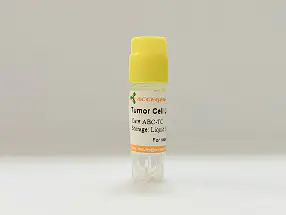
For research use only
| Cat No. | ABC-TC0245 |
| Product Type | Human Gastric Cancer Cell Lines |
| Species | Human |
| Growth Conditions | 37 ℃, 5% CO2 |
| Product Code | ESO26 |
Leverage ESO26 for gastroesophageal junction adenocarcinoma modeling, tumor biology studies, and therapeutic screening in upper GI cancer research.
ESO26 Human, Gastric Cancer, Stomach is a human gastric adenocarcinoma cell line ideal for stomach cancer research, derived from gastroesophageal junction and distal oesophagus tissues of a 56-year-old male patient with lymph nodes and distant metastases. The cells exhibit epithelial morphology, forming a characteristic cobblestone-like monolayer with large spherical clumps that are loosely adherent or free-floating. The cells exhibit a human hypodiploid karyotype and harbor mutations in TP53. They express SOX9 and are tumorigenic. The cells undergo rigorous screening and isolation procedures, and are rigorously tested to ensure they are free of contamination from HIV-1, HBV, HCV, Syphilis, Mycoplasma, Fungi, Yeast, and Bacteria.
| Product Code | ESO26 |
| Species | Human |
| Cat.No | ABC-TC0245 |
| Product Category | Tumor Cell Lines |
| Size/Quantity | 1 vial |
| Growth Mode | Suspension |
| Shipping Info | Dry Ice |
| Growth Conditions | 37 ℃, 5% CO2 |
| Biosafety Level | 1 |
| Storage | Liquid Nitrogen |
| Product Type | Human Gastric Cancer Cell Lines |
ESO26 Human, Gastric Cancer, Stomach serves as a valuable in vitro model for studying the molecular pathogenesis of gastroesophageal cancers and evaluating therapeutic strategies. Its primary applications include drug screening against adenocarcinoma targets, particularly given its documented p53 mutation, and investigating specific oncogenic signaling pathways dysregulated in stomach cancer progression, leveraging its well-characterized genomic alterations to explore potential therapeutic vulnerabilities.
When you publish your research, please cite our product as “AcceGen Biotech Cat.# XXX-0000”. In return, we’ll give you a $200 coupon. Simply click here and submit your paper’s PubMed ID (PMID).