



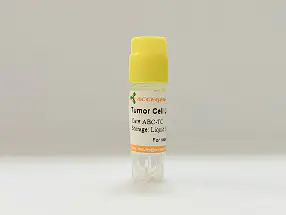
For research use only
| Cat No. | ABC-TC0265 |
| Product Type | Human Melanoma Cell Lines |
| Cell Type | Epithelial |
| Species | Human |
| Growth Conditions | 37 ℃, 5% CO2 |
| Source Organ | Skin |
| Disease | Melanoma |
| Product Code | G361; G361-mel; G361mel |
The cell line is established from a malignant melanoma of a 31 year old male Caucasian.
G-361 is a human malignant melanoma cell line isolated from a metastatic site in the skin of a 31-year-old white male with malignant melanoma. This cell line exhibits epithelial-like morphology and grows as an adherent monolayer culture, requiring enzymatic dissociation. The Y chromosome could not be detected in this cell line. It harbors a characteristic BRAF V600E mutation, along with mutations in TP53, and demonstrates expression of melanin. G-361 is tumorigenic and exhibits metastatic potential in experimental models. The cells undergo rigorous screening and isolation procedures, and are rigorously tested to ensure they are free of contamination from HIV-1, HBV, HCV, Syphilis, Mycoplasma, Fungi, Yeast, and Bacteria.
| Product Code | G361; G361-mel; G361mel |
| Species | Human |
| Cat.No | ABC-TC0265 |
| Product Category | Tumor Cell Lines |
| Size/Quantity | 1 vial |
| Cell Type | Epithelial |
| Growth Mode | Adherent |
| Shipping Info | Dry Ice |
| Growth Conditions | 37 ℃, 5% CO2 |
| Source Organ | Skin |
| Disease | Melanoma |
| Biosafety Level | 1 |
| Storage | Liquid Nitrogen |
| Product Type | Human Melanoma Cell Lines |
G-361 serves as a critical in vitro model for elucidating the molecular pathogenesis of cutaneous melanoma. Its primary applications include drug screening for antineoplastic agents, particularly evaluating inhibitors targeting the dysregulated MAPK signaling pathway characteristic of this malignancy. They also provide a relevant system for gene mutation analysis and assessing drug resistance mechanisms in metastatic melanoma.
When you publish your research, please cite our product as “AcceGen Biotech Cat.# XXX-0000”. In return, we’ll give you a $200 coupon. Simply click here and submit your paper’s PubMed ID (PMID).