




For research use only
| Cat No. | ABI-TC192D |
| Product Type | Immortalized Cell Line |
| Cell Type | Kupffer Cell |
| Species | Mouse |
| Growth Conditions | 37 ℃, 5% CO2 |
| Source Organ | Liver |
| Disease | Normal |
| Storage | Liquid Nitrogen |
Immortalized Mouse Kupffer Cell Line (ImKC) enables liver immunology research, macrophage function studies, and inflammation modeling in hepatic systems.
Immortalized Mouse Kupffer Cells (ImKCs) are derived from primary Kupffer cells—the liver-resident macrophages of mouse liver—selected using the F4/80 surface marker, a hallmark of Kupffer cells. The cell line was immortalized via lentiviral transduction of the SV40 Large T antigen, leading to increased telomerase activity and elevated p53 expression while retaining key functional properties of primary Kupffer cells, including phagocytosis, antigen presentation, and immune surveillance. ImKCs are widely used in biochemical assays such as PCR, Western blotting, and immunoprecipitation for immunological and liver-related research. When cultured in optimized Mouse Kupffer Cell Medium (e.g., AcceGen’s formulation), they can be passaged multiple times while maintaining stability. Importantly, ImKCs remain non-tumorigenic and non-metastatic in vivo. The cells are cryopreserved to ensure high viability and functionality upon thawing. As an immortal cell line derived from immortal mouse Kupffer cells, this kupffer cell line serves as a representative mouse cell line model for liver immunology and macrophage-related research
| Product Code | Immortalized Mouse Kupffer Cell Line (ImKC), Immortalized Mouse Kupffer Cells, ImKC, Murine Kupffer Cell Line |
| Species | Mouse |
| Cat.No | ABI-TC192D |
| Product Category | Immortalized Cell Lines |
| Size/Quantity | 1 vial |
| Cell Type | Kupffer Cell |
| Growth Mode | Adherent |
| Shipping Info | Dry Ice |
| Growth Conditions | 37 ℃, 5% CO2 |
| Source Organ | Liver |
| Disease | Normal |
| Biosafety Level | 2 |
| Storage | Liquid Nitrogen |
| Product Type | Immortalized Cell Line |
| Immortalization Method | Serial passaging and transduction with recombinant lentiviruses carrying SV40 Large T antigen. |
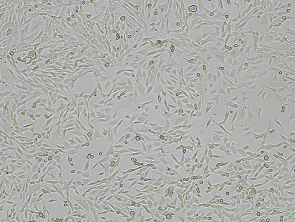
| Morphology | Macrophage-like |
| Quality Control | All cells are tested negative for mycoplasma, bacteria, yeast, and fungi. |
Immortalized Mouse Kupffer Cells (ImKC) provide a powerful tool for investigating liver immune functions, macrophage biology, and hepatic disease mechanisms. These cells, with their authentic macrophage-like morphology and retained phagocytic and immune surveillance abilities, serve as an excellent model for studying Kupffer cell behavior in vitro. Their high telomerase activity and stable expression of immune markers make them perfect for exploring inflammatory responses, innate immunity, and pathogen interactions. They offer a reliable system for drug screening, toxicology assays, and modeling liver-related diseases including fibrosis and hepatitis. Cryopreserved for high viability and functionality, these cells are an indispensable asset for researchers diving deep into liver immunology and macrophage-mediated pathophysiology.
When you publish your research, please cite our product as “AcceGen Biotech Cat.# XXX-0000”. In return, we’ll give you a $200 coupon. Simply click here and submit your paper’s PubMed ID (PMID).
Dong T, Hu G, Fan Z, et al. Activation of GPR3-β-arrestin2-PKM2 pathway in Kupffer cells stimulates glycolysis and inhibits obesity and liver pathogenesis. Nature Communications. 2024;15(1):807. doi:10.1038/s41467-024-45167-5
Yes, our immortalized cells can be cryopreserved and recovered just like established cell lines. Under appropriate culture conditions, ImKC cells can be passaged at least 10 times or more after thawing under AcceGen’s recommended culture conditions.