



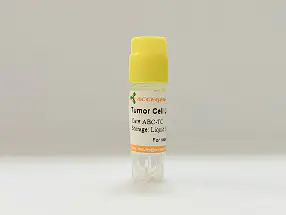
For research use only
| Cat No. | ABC-TC023S |
| Product Type | Gold Fish Red Pigment Cells |
| Cell Type | Erythrophore |
| Species | Gold Fish |
| Growth Conditions | 37 ℃, 5% CO2 |
| Disease | Erythrophoromas |
| Product Code | GEM 199; GEM199; Goldfish Erythrophoroma-199 |
GEM-199 is a goldfish tumor cell line resistant to γ-rays, used for radiation mutation studies and photoreactivation analysis in aquatic model systems.
The GEM-199 is a erythrophore-derived tumor cell line originating from goldfish (Carassius auratus) erythrophoroma. Established in 1978, the cell line exhibits adherent growth with red pigment granules typical of erythrophore lineage. Morphologically, the cells display pigment variation and clonal heterogeneity, reflecting their tumor origin. Studies have shown responsiveness to radiation and chemical mutagens, supporting its use in genotoxicity studies. Research has demonstrated that GEM-199 has a greater resistance to γ-rays compared to mammalian cells and CAF-MM1 cells, which were derived from the normal fin tissue of goldfish. The photoreactivation following UV irradiation was observed in GEM-199 cells, impacting both survival and mutation rates. Its derivation from erythrophoroma makes it a valuable model for studying pigment cell transformation, pigment biosynthesis, and environmental toxicology in aquatic species.
| Product Code | GEM 199; GEM199; Goldfish Erythrophoroma-199 |
| Species | Gold Fish |
| Cat.No | ABC-TC023S |
| Product Category | Tumor Cell Lines |
| Size/Quantity | 1 vial |
| Cell Type | Erythrophore |
| Growth Mode | Adherent |
| Shipping Info | Dry Ice |
| Growth Conditions | 37 ℃, 5% CO2 |
| Disease | Erythrophoromas |
| Biosafety Level | 1 |
| Storage | Liquid Nitrogen |
| Product Type | Gold Fish Red Pigment Cells |
The GEM-199 cell line serves as a vital tool in understanding the biology of erythrophoroma, particularly its invasive properties. Additionally, researchers harness its capabilities to explore the radiosensitivity and lethal impact of gamma-rays on cellular structures. This versatile cell line not only enables investigations into DNA damage and repair mechanisms but also aids in unraveling the complexities of tumor invasion and response to radiation, fostering advancements in cancer research and therapeutic strategies.
When you publish your research, please cite our product as “AcceGen Biotech Cat.# XXX-0000”. In return, we’ll give you a $200 coupon. Simply click here and submit your paper’s PubMed ID (PMID).