



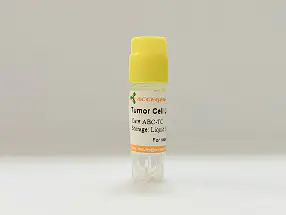
For research use only
| Cat No. | ABC-TC0274 |
| Product Type | Rat Lymphocytes Cell Lines |
| Cell Type | B Cell |
| Species | Rat |
| Growth Conditions | 37 ℃, 5% CO2 |
| Source Organ | Spleen |
| Product Code | GK 1.5; GK-1.5 |
Animals were immunized with the cloned cytotoxic T lymphocyte lines V4 and 243/2.5; Spleen cells were fused with Sp2/0-Ag14 myeloma cells
GK1.5 is a murine hybridoma cell line isolated from the spleen of a mouse with leukemia. These cells exhibit characteristic lymphoblast-like features and maintain stable suspension growth properties in standard in vitro culture environments. GK1.5 cells constitutively express a rat IgG2b monoclonal antibody specific for the mouse L3T4 antigen (CD4), targeting helper and inducer T cells. These cells are non-tumorigenic and do not exhibit metastatic potential in standard experimental models. The cells undergo rigorous screening and isolation procedures, and are rigorously tested to ensure they are free of contamination from Mycoplasma, Fungi, Yeast, and Bacteria.
| Product Code | GK 1.5; GK-1.5 |
| Species | Rat |
| Cat.No | ABC-TC0274 |
| Product Category | Tumor Cell Lines |
| Size/Quantity | 1 vial |
| Cell Type | B Cell |
| Growth Mode | Suspension |
| Shipping Info | Dry Ice |
| Growth Conditions | 37 ℃, 5% CO2 |
| Source Organ | Spleen |
| Biosafety Level | 1 |
| Storage | Liquid Nitrogen |
| Product Type | Rat Lymphocytes Cell Lines |
GK1.5 hybridoma cells produce anti-mouse CD4 monoclonal antibodies for immunological research applications. They enable in vitro and in vivo T-cell depletion studies to investigate CD4⁺ T-cell functions in autoimmune disease models and transplantation tolerance. This system facilitates immune cell subset isolation via antibody-mediated purification and T-cell activation pathway analysis, advancing mechanistic understanding of adaptive immunity and immunotherapy development.
When you publish your research, please cite our product as “AcceGen Biotech Cat.# XXX-0000”. In return, we’ll give you a $200 coupon. Simply click here and submit your paper’s PubMed ID (PMID).