



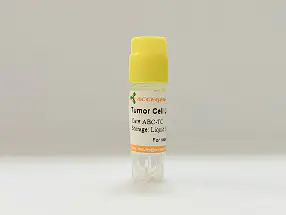
For research use only
| Cat No. | ABC-TC0385 |
| Product Type | Human Lung Cell Lines |
| Species | Human |
| Growth Conditions | 37 ℃, 5% CO2 |
| Product Code | HGF cell, HGF cell line |
Organism: Homo sapiens, human / Tissue: gingival biopsy / Disease: normal
HGF-1 is a human gingival fibroblast cell line derived from explant cultures of the gingival tissue of a 28-year-old male donor. Although non-malignant in origin, HGF-1 exhibits continuous proliferation capacity in vitro and is considered immortalized through extended passaging. These cells display a spindle-shaped morphology typical of fibroblasts and grow as adherent monolayers. Cytogenetic analysis reveals a pseudodiploid karyotype with structural chromosomal aberrations. HGF-1 expresses high levels of mesenchymal markers including vimentin, fibronectin, and collagen type I. They lack tumorigenicity potential when implanted into immunodeficient mice. This cell line has been widely used as a model for periodontal connective tissue biology, especially in studies involving inflammation, extracellular matrix remodeling, and epithelial-mesenchymal interactions. The cells undergo rigorous screening and isolation procedures, and are rigorously tested to ensure they are free of contamination from HIV-1, HBV, HCV, Syphilis, Mycoplasma, Fungi, Yeast, and Bacteria.
| Product Code | HGF cell, HGF cell line |
| Species | Human |
| Cat.No | ABC-TC0385 |
| Product Category | Tumor Cell Lines |
| Size/Quantity | 1 vial |
| Shipping Info | Dry Ice |
| Growth Conditions | 37 ℃, 5% CO2 |
| Biosafety Level | 1 |
| Storage | Liquid Nitrogen |
| Product Type | Human Lung Cell Lines |
HGF-1 cells are widely used in studies of periodontal pathophysiology, gingival tissue regeneration, and inflammation-mediated oral diseases. They provide a stable and reproducible in vitro platform to investigate the effects of cytokines, bacterial toxins, and dental biomaterials on gingival fibroblast function. Additionally, HGF-1 cells support research into cell-matrix interactions, wound healing mechanisms, and drug screening related to oral soft tissue disorders.
When you publish your research, please cite our product as “AcceGen Biotech Cat.# XXX-0000”. In return, we’ll give you a $200 coupon. Simply click here and submit your paper’s PubMed ID (PMID).