
For research use only
| Cat No. | ABC-SC0123T |
| Product Type | Human iPSCs |
| Cell Type | Induced Pluripotent Stem Cell |
| Species | Human |
| Growth Conditions | 37 ℃, 5% CO2 |
| Disease | Normal |
| Storage | Liquid Nitrogen |
CHD8+/− iPSC were derived from skin fibroblasts, a CHD8 allele was knocked out using CRISPR/Cas9 gene editing
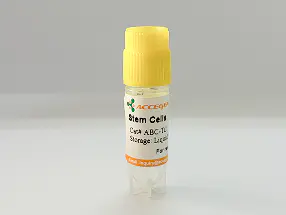
HighQC™ CHD8+/− Induced Pluripotent Stem Cells (iPSCs) are human iPSCs generated from skin fibroblasts obtained from a typically developing male donor with a normal karyotype, in which one CHD8 allele was knocked out using CRISPR/Cas9 gene editing. These cells retain typical human pluripotent stem cell morphology, forming compact, tightly packed colonies with well-defined borders, large nuclei, minimal cytoplasm, and clonal growth under adherent culture conditions. CHD8+/− iPSCs exhibit positive expression of SSEA-4. These cells possess the capacity to differentiate into derivatives of all three germ layers—ectoderm, mesoderm, and endoderm—under directed differentiation conditions. The cells undergo rigorous screening and isolation procedures, and are rigorously tested to ensure they are free of contamination from HIV-1, HBV, HCV, Syphilis, Mycoplasma, Fungi, Yeast, and Bacteria.
| Product Code | HighQC™ CHD8+/− Induced Pluripotent Stem Cell, CHD8-HET-iPSC, CHD8 Heterozygous iPSC Line |
| Species | Human |
| Cat.No | ABC-SC0123T |
| Product Category | Stem Cells |
| Size/Quantity | 1 vial |
| Cell Type | Induced Pluripotent Stem Cell |
| Growth Mode | Adherent |
| Shipping Info | Dry Ice |
| Growth Conditions | 37 ℃, 5% CO2 |
| Disease | Normal |
| Biosafety Level | 2 |
| Storage | Liquid Nitrogen |
| Product Type | Human iPSCs |
HighQC™ CHD8+/− Induced Pluripotent Stem Cells, also known as CHD8 heterozygous knockout iPSCs, provide a robust in vitro model for investigating human brain development, neurodevelopmental disorders, and gene regulatory mechanisms. These cells are widely used to study CHD8-mediated chromatin dynamics, transcriptional regulation, and cell cycle control through interactions with p53, as well as the molecular pathways underlying autism spectrum disorders.
When you publish your research, please cite our product as "AcceGen Biotech Cat.# XXX-0000". In return, we’ll give you a $200 coupon. Simply click here and submit your paper’s PubMed ID (PMID).