



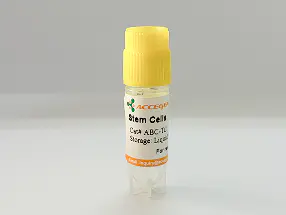
For research use only
| Cat No. | ABC-SC2050 |
| Product Type | Human iPSCs |
| Cell Type | Induced Pluripotent Stem Cell |
| Species | Human |
| Growth Conditions | 37 ℃, 5% CO2 |
| Source Organ | Fibroblast |
| Disease | Alzheimer’s Disease |
| Storage | Liquid Nitrogen |
Cell Type: iPSC; Disease: Alzheimer Disease; AD.
HighQC™ Human IPSC From Fibroblast-Alzheimer Disease is a disease-specific human induced pluripotent stem cell line derived from dermal fibroblasts of a donor diagnosed with Alzheimer’s Disease (AD). The resulting iPSCs (induced pluripotent stem cells) exhibit adherent growth with a high nucleus-to-cytoplasm ratio. They retain the fundamental capacity to differentiate into cell types representing all three germ layers—ectoderm, mesoderm, and endoderm — under appropriate directed differentiation protocols. These cells express the key pluripotency-associated marker SSEA-4. They maintain AD-related neuronal physiology and reflect neural tissue function. The cells undergo rigorous screening and isolation procedures, and are rigorously tested to ensure they are free of contamination from HIV-1, HBV, HCV, Syphilis, Mycoplasma, Fungi, Yeast, and Bacteria.
| Product Code | HighQC™ Human IPSC From Fibroblast-Alzheimer Disease, HighQC™ hiPSC AD, hiPSC-AD, HighQC™ Human Induced Pluripotent Stem Cells From Fibroblast-Alzheimer Disease |
| Species | Human |
| Cat.No | ABC-SC2050 |
| Product Category | Stem Cells |
| Size/Quantity | 1 vial |
| Cell Type | Induced Pluripotent Stem Cell |
| Growth Mode | Adherent |
| Shipping Info | Dry Ice |
| Growth Conditions | 37 ℃, 5% CO2 |
| Source Organ | Fibroblast |
| Disease | Alzheimer’s Disease |
| Storage | Liquid Nitrogen |
| Product Type | Human iPSCs |
HighQC™ Human IPSC From Fibroblast-Alzheimer Disease provides a patient-specific model for neurological development and disease research. Its pluripotent capacity enables differentiation into disease-relevant cell types such as cortical neurons and astrocytes. This system is used to model amyloid-beta and tau pathology, study neuronal development and synaptic dysfunction, and perform compound screening in neural organoids, aiding research into Alzheimer’s pathogenesis and therapeutic discovery.
When you publish your research, please cite our product as "AcceGen Biotech Cat.# XXX-0000". In return, we’ll give you a $200 coupon. Simply click here and submit your paper’s PubMed ID (PMID).