



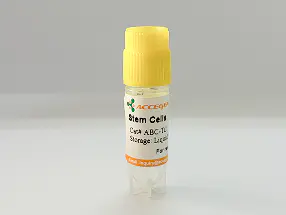
For research use only
| Cat No. | ABC-SC2075 |
| Product Type | Human iPSCs |
| Cell Type | Induced Pluripotent Stem Cell |
| Species | Human |
| Growth Conditions | 37 ℃, 5% CO2 |
| Source Organ | Fibroblast |
| Disease | Familial Alzheimer’s Disease |
| Storage | Liquid Nitrogen |
HighQC™ Human IPSC From Fibroblast-Familial Alzheimer’s Disease models Alzheimer’s pathology and supports drug development using disease-relevant iPSCs.
HighQC™ Human IPSC From Fibroblast-Familial Alzheimer’s Disease is a disease-specific human induced pluripotent stem cell line derived from dermal fibroblasts of a donor with Familial Alzheimer’s Disease (FAD). This cell line was generated using a non-integrating episomal plasmid method. The resulting iPSCs (induced pluripotent stem cells) exhibit adherent growth with a high nucleus-to-cytoplasm ratio and well-defined borders. The cells retain pluripotency for FAD-related molecular mechanism investigation. They retain the fundamental capacity for trilineage differentiation into cell types representing the ectoderm, mesoderm, and endoderm germ layers. Core pluripotency markers SSEA-4 is expressed. The cells undergo rigorous screening and isolation procedures, and are rigorously tested to ensure they are free of contamination from HIV-1, HBV, HCV, Syphilis, Mycoplasma, Fungi, Yeast, and Bacteria.
| Product Code | HighQC™ Human IPSC From Fibroblast-Familial Alzheimer’s Disease, HighQC™ hiPSC FAD, hiPSC-FAD, HighQC™ Human Induced Pluripotent Stem Cells From Fibroblast-Familial Alzheimer Disease |
| Species | Human |
| Cat.No | ABC-SC2075 |
| Product Category | Stem Cells |
| Size/Quantity | 1 vial |
| Cell Type | Induced Pluripotent Stem Cell |
| Growth Mode | Adherent |
| Shipping Info | Dry Ice |
| Growth Conditions | 37 ℃, 5% CO2 |
| Source Organ | Fibroblast |
| Disease | Familial Alzheimer’s Disease |
| Storage | Liquid Nitrogen |
| Product Type | Human iPSCs |
| Gene Info | Gene: PSEN1; Mutation: ALS246GLU |
HighQC™ Human IPSC From Fibroblast-Familial Alzheimer’s Disease provides a genetically accurate model for neurodegenerative research. Its pluripotent capacity enables differentiation into cortical neurons and glial cells, facilitating the study of amyloid-beta and tau pathology in a patient-specific context. This system is instrumental for modeling disease mechanisms, investigating neuronal development and synaptic dysfunction, and serves as a platform for compound screening in neural organoids.
When you publish your research, please cite our product as "AcceGen Biotech Cat.# XXX-0000". In return, we’ll give you a $200 coupon. Simply click here and submit your paper’s PubMed ID (PMID).