



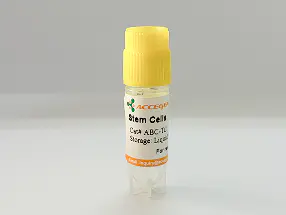
For research use only
| Cat No. | ABC-SC2039 |
| Product Type | Human iPSCs |
| Cell Type | Induced Pluripotent Stem Cell |
| Species | Human |
| Growth Conditions | 37 ℃, 5% CO2 |
| Source Organ | Fibroblast |
| Disease | Kearns-Sayre Syndrome |
| Storage | Liquid Nitrogen |
Cell Type: iPSC; Disease: Kearns-Sayre Syndrome; KSS.
HighQC™ Human IPSCs From Fibroblasts-Kearns-Sayre Syndrome are a disease-affected induced pluripotent stem cell line generated from patient-derived dermal fibroblasts obtained via skin biopsy, carrying Kearns–Sayre syndrome–associated mitochondrial abnormalities, a heritable mitochondrial disorder. These cells exhibit classical human iPSC morphology, including compact colonies with well-defined borders, a high nucleus-to-cytoplasm ratio, and prominent nucleoli. These iPSCs exhibit pluripotency, with the ability to differentiate into all three germ layers under defined conditions, and express the pluripotency marker SSEA-4. The cells undergo rigorous screening and isolation procedures, and are rigorously tested to ensure they are free of contamination from HIV-1, HBV, HCV, Syphilis, Mycoplasma, Fungi, Yeast, and Bacteria.
| Product Code | HighQC™ Human IPSC From Fibroblast-Kearns-Sayre Syndrome, HighQC™ hiPSC KSS, hiPSC-KSS, HighQC™ Human Induced Pluripotent Stem Cells From Fibroblast-Kearns-Sayre Syndrome |
| Species | Human |
| Cat.No | ABC-SC2039 |
| Product Category | Stem Cells |
| Size/Quantity | 1 vial |
| Cell Type | Induced Pluripotent Stem Cell |
| Growth Mode | Adherent |
| Shipping Info | Dry Ice |
| Growth Conditions | 37 ℃, 5% CO2 |
| Source Organ | Fibroblast |
| Disease | Kearns-Sayre Syndrome |
| Storage | Liquid Nitrogen |
| Product Type | Human iPSCs |
HighQC™ Human IPSCs From Fibroblasts-Kearns-Sayre Syndrome, also known as Kearns-Sayre Syndrome iPSCs and KSS mitochondrial disease iPSCs, provide a robust in vitro research model for investigating mitochondrial biology and genetic regulation under a patient-relevant background. This cell line can be used to study mitochondrial DNA maintenance, oxidative phosphorylation dynamics, and mitochondrial–nuclear interactions during pluripotency and lineage-specific differentiation. Upon directed differentiation, it supports mechanistic research into how mitochondrial dysfunction influences cellular energy metabolism, differentiation efficiency, and stress responses in developmentally relevant cell types.
When you publish your research, please cite our product as "AcceGen Biotech Cat.# XXX-0000". In return, we’ll give you a $200 coupon. Simply click here and submit your paper’s PubMed ID (PMID).