



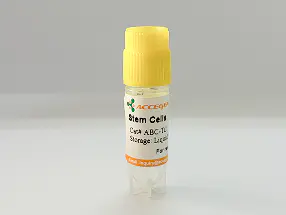
For research use only
| Cat No. | ABC-SC0016T |
| Product Type | Human iPSCs |
| Cell Type | Induced Pluripotent Stem Cell |
| Species | Human |
| Growth Conditions | 37 ℃, 5% CO2 |
| Source Organ | Foreskin |
| Disease | Fibroblasts Of A Cystic Fibrosis |
| Storage | Liquid Nitrogen |
Deploy HighQC™ Human IPSC From Foreskin Fibroblast (Fibroblasts Of A Cystic Fibrosis Patient) to model CFTR dysfunction and test therapeutic agents.
HighQC™ Human iPSC From Foreskin Fibroblasts (Fibroblasts Of A Cystic Fibrosis Patient) is a type of induced pluripotent stem cell derived from foreskin fibroblasts of a patient diagnosed with cystic fibrosis (CF), a life-threatening autosomal recessive disorder caused by mutations in the CFTR gene. The cell line was generated via episomal reprogramming using a proprietary mix of vectors, containing OCT4, SOX2, KLF4, p53 antisense, and EBNA-1. It was validated for pluripotency based on classical pluripotent colony morphology, alkaline phosphatase expression, and expression of key pluripotency markers including SSEA-4. The cells undergo rigorous screening and isolation procedures, and are rigorously tested to ensure they are free of contamination from HIV-1, HBV, HCV, syphilis, mycoplasma, fungi, yeast, and bacteria.
| Product Code | HighQC™ Human IPSC From Foreskin Fibroblast (Fibroblasts Of A Cystic Fibrosis Patient), Human iPSC-Fib-CF, hIPSC-Fib-CF, Human Foreskin Fibroblast Derived iPSC Cystic Fibrosis |
| Species | Human |
| Cat.No | ABC-SC0016T |
| Product Category | Stem Cells |
| Size/Quantity | 1 vial |
| Cell Type | Induced Pluripotent Stem Cell |
| Growth Mode | Adherent |
| Shipping Info | Dry Ice |
| Growth Conditions | 37 ℃, 5% CO2 |
| Source Organ | Foreskin |
| Disease | Fibroblasts Of A Cystic Fibrosis |
| Storage | Liquid Nitrogen |
| Product Type | Human iPSCs |
HighQC™ Human iPSC From Foreskin Fibroblasts (Fibroblasts Of A Cystic Fibrosis Patient) serves as a disease-specific in vitro model to study the pathogenesis of cystic fibrosis, particularly protein misfolding and chloride channel dysfunction associated with CFTR mutations. When differentiating these iPSCs into definitive endoderm, the developmental precursor of lung epithelium, it facilitates high-throughput drug screening, validation of CFTR modulators, and evaluation of gene correction strategies.
When you publish your research, please cite our product as "AcceGen Biotech Cat.# XXX-0000". In return, we’ll give you a $200 coupon. Simply click here and submit your paper’s PubMed ID (PMID).