



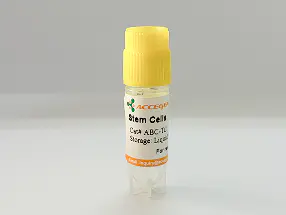
For research use only
| Cat No. | ABC-SC0018T |
| Product Type | Human iPSCs |
| Cell Type | Induced Pluripotent Stem Cell |
| Species | Human |
| Growth Conditions | 37 ℃, 5% CO2 |
| Source Organ | Foreskin |
| Disease | Normal |
| Storage | Liquid Nitrogen |
iPSC (induced Pluripotent Stem cells) reprogrammed from human Foreskin Fibroblasts
HighQC™ Human iPSC From Foreskin Fibroblasts (Foreskin Fibroblasts) are induced pluripotent stem cells reprogrammed from foreskin fibroblasts of a healthy donor. The cell line was generated via episomal reprogramming using a proprietary mix of vectors, containing OCT4, SOX2, KLF4, p53 antisense, and EBNA-1. It was validated for pluripotency based on classical colony morphology, alkaline phosphatase expression, and expression of core stemness markers including SSEA-4. These iPSCs exhibit robust self-renewal capacity and classical growth characteristics. These cells are capable of differentiating into hepatocyte-like cells in vitro and into lineages of all three germ layers. The cells undergo rigorous screening and isolation procedures, and are rigorously tested to ensure they are free of contamination from HIV-1, HBV, HCV, syphilis, mycoplasma, fungi, yeast, and bacteria.
| Product Code | HighQC™ Human IPSC From Foreskin Fibroblast (Foreskin Fibroblasts), Human iPSC-Fib, hIPSC-Fib, Human Foreskin Fibroblast Derived iPSC |
| Species | Human |
| Cat.No | ABC-SC0018T |
| Product Category | Stem Cells |
| Size/Quantity | 1 vial |
| Cell Type | Induced Pluripotent Stem Cell |
| Growth Mode | Adherent |
| Shipping Info | Dry Ice |
| Growth Conditions | 37 ℃, 5% CO2 |
| Source Organ | Foreskin |
| Disease | Normal |
| Storage | Liquid Nitrogen |
| Product Type | Human iPSCs |
HighQC™ Human iPSC From Foreskin Fibroblasts (Foreskin Fibroblasts) serve as a physiologically relevant in vitro platform for modeling human development, disease pathogenesis, and cellular reprogramming. These hypoxia-reprogrammed iPSCs enable targeted gene editing studies to investigate genotype-phenotype relationships in monogenic disorders. Furthermore, their robust differentiation capacity into all three germ layers supports drug screening applications, allowing efficacy and toxicity testing of candidate compounds against patient-specific cellular phenotypes in disease-relevant cellular models. This facilitates mechanistic insights into disease progression.
When you publish your research, please cite our product as "AcceGen Biotech Cat.# XXX-0000". In return, we’ll give you a $200 coupon. Simply click here and submit your paper’s PubMed ID (PMID).