



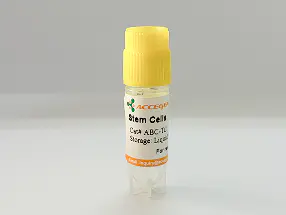
For research use only
| Cat No. | ABC-SC0054 |
| Product Type | Animal Mesenchymal Stem Cells |
| Cell Type | Mesenchymal Stem Cell |
| Species | Mouse |
| Growth Conditions | 37 ℃, 5% CO2 |
| Source Organ | Bone Marrow |
| Disease | Normal |
| Storage | Liquid Nitrogen |
Mouse Bone Marrow Mesenchymal Stem Cells; Frozen Vial and Plated cells are available.
HighQC™ Mouse Bone Marrow Mesenchymal Stem Cells (mBM-MSCs) are isolated from bone marrow of healthy mice. These adherent cells display classic fibroblast-like morphology, forming elongated, spindle-shaped colonies in monolayer under standard culture conditions. They are phenotypically characterized by high expression of canonical mesenchymal markers, including CD44, CD73, and CD105. Cytogenetic analysis confirms maintenance of a stable, pseudodiploid karyotype at early passages. These mouse bone marrow-derived mesenchymal stem cells exhibit reliable proliferative capacity and robust multipotency, readily differentiating into osteogenic, adipogenic, and chondrogenic lineages under defined induction culture conditions. Their ability to secrete trophic factors and modulate immune responses makes them a versatile in vitro model for regenerative and immunological studies. Each lot undergoes rigorous screening and isolation procedures, and is rigorously tested to ensure it is free of contamination from mycoplasma, fungi, yeast, and bacteria.
| Product Code | HighQC™ Mouse Bone Marrow Mesenchymal Stem Cell, Mouse BM-MSC, mBM-MSC, Mouse Mesenchymal Stem Cells |
| Species | Mouse |
| Cat.No | ABC-SC0054 |
| Product Category | Stem Cells |
| Size/Quantity | 1 vial |
| Cell Type | Mesenchymal Stem Cell |
| Growth Mode | Adherent |
| Shipping Info | Dry Ice |
| Growth Conditions | 37 ℃, 5% CO2 |
| Source Organ | Bone Marrow |
| Disease | Normal |
| Biosafety Level | 1 |
| Storage | Liquid Nitrogen |
| Product Type | Animal Mesenchymal Stem Cells |
HighQC™ mBM-MSCs offer a consistent and physiologically relevant platform for investigating tissue regeneration, bone or cartilage repair, and inflammatory disease mechanisms. Their trilineage differentiation capacity makes them ideal for evaluating biomaterials, small molecules, or drug candidates in skeletal tissue engineering models. Additionally, these cells are frequently employed in immunological assays to study MSC-mediated modulation of T-cell activation and cytokine secretion in vitro.
When you publish your research, please cite our product as "AcceGen Biotech Cat.# XXX-0000". In return, we’ll give you a $200 coupon. Simply click here and submit your paper’s PubMed ID (PMID).