



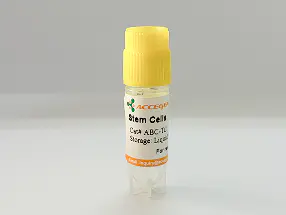
For research use only
| Cat No. | ABC-SC0052 |
| Product Type | Animal Adult Stem Cells |
| Cell Type | Stem Cell |
| Species | Mouse |
| Growth Conditions | 37 ℃, 5% CO2 |
| Source Organ | Heart |
| Disease | Normal |
| Storage | Liquid Nitrogen |
Mouse Cardiomyocytes trans-differentiated from Mouse Embryonic Stem Cells; Frozen Vial and Plated cells are available.
HighQC™ Mouse Cardiomyocyte Stem Cells are a resident stem cell population isolated from the neonate mouse myocardium. These cells display small, often spindle shaped morphology and typically grow as loosely adherent clusters. They co-express key stem cell markers such as Sca 1 and c Kit, along with early cardiac transcription factors NKX2.5 and GATA4. Cytogenetic analyses confirm genomic stability, with no gross chromosomal abnormalities during early passages. These murine cardiac-derived cardiomyocytes exhibit robust proliferation in vitro, and retain multipotent differentiation capacity into cardiomyocytes, endothelial cells, and smooth muscle cells under defined induction conditions. The cells are rigorously tested to ensure they are free of contamination from Mycoplasma, Fungi, Yeast and Bacteria.
| Product Code | HighQC™ Mouse Cardiomyocytes Stem Cell, Mouse CM SC, mCM-SC, Mouse Cardiac Myocyte Progenitors |
| Species | Mouse |
| Cat.No | ABC-SC0052 |
| Product Category | Stem Cells |
| Size/Quantity | 1 vial |
| Cell Type | Stem Cell |
| Growth Mode | Adherent |
| Shipping Info | Dry Ice |
| Growth Conditions | 37 ℃, 5% CO2 |
| Source Organ | Heart |
| Disease | Normal |
| Biosafety Level | 1 |
| Storage | Liquid Nitrogen |
| Product Type | Animal Adult Stem Cells |
HighQC™ Mouse Cardiomyocyte Stem Cells serve as a robust in vitro model to study cardiac lineage commitment, myocardial regeneration, and cellular responses to ischemic or cardiotoxic agents. They are ideal for drug screening, cardiotoxicity testing, and identification of regenerative small molecules or gene targets. screening compounds that promote cardiac repair, and dissecting molecular pathways of cardiomyogenesis. Moreover, their ability to differentiate into multiple cardiac cell types makes them suitable for modeling heart disease mechanisms and evaluating cell-therapy potential in cardiac pathophysiology research.
When you publish your research, please cite our product as "AcceGen Biotech Cat.# XXX-0000". In return, we’ll give you a $200 coupon. Simply click here and submit your paper’s PubMed ID (PMID).