



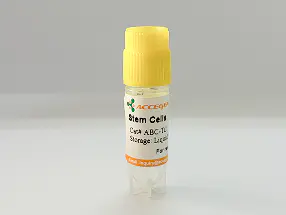
For research use only
| Cat No. | ABC-SC0027 |
| Product Type | Animal Adult Stem Cells |
| Cell Type | Stem Cell |
| Species | Mouse |
| Growth Conditions | 37 ℃, 5% CO2 |
| Source Organ | Retina |
| Disease | Normal |
| Storage | Liquid Nitrogen |
Mouse Stem Cells; Frozen Vial and Plated cells are available.
HighQC™ Mouse Stem Cells are isolated from defined adult or postnatal mouse tissues, such as bone marrow, adipose, and neural tissues, and represent tissue-specific multipotent progenitor cells. These cells exhibit adherent growth with spindle-shaped or epithelial-like morphology characteristic of their tissue of origin. Mesenchymal stem cells (MSCs) express canonical mesenchymal markers such as CD73, CD90, and CD105, while neural progenitor cells (NSCs) express Nestin and Sox2. Each cell type expresses markers consistent with its tissue-specific lineage and does not cross-express markers of unrelated lineages. These cells demonstrate multipotent differentiation potential toward lineages consistent with their tissue of origin, such as adipocytes, osteoblasts, and chondrocytes for MSCs, or neurons and glial cells for NSCs, under lineage-specific induction conditions. Cells are maintained in feeder-free culture systems with specialized media to support self-renewal and viability.
| Product Code | HighQC™ Mouse Stem Cell, Mouse Stem Cells, mSCs |
| Species | Mouse |
| Cat.No | ABC-SC0027 |
| Product Category | Stem Cells |
| Size/Quantity | 1 vial |
| Cell Type | Stem Cell |
| Growth Mode | Adherent |
| Shipping Info | Dry Ice |
| Growth Conditions | 37 ℃, 5% CO2 |
| Source Organ | Retina |
| Disease | Normal |
| Biosafety Level | 1 |
| Storage | Liquid Nitrogen |
| Product Type | Animal Adult Stem Cells |
HighQC™ Mouse Stem Cells are suitable for studying tissue-specific lineage differentiation, regenerative potential, paracrine signaling, and cell–cell interactions. They support applications in preclinical regenerative medicine research, disease modeling within their lineage spectrum, drug screening for tissue repair, and co-culture systems. Organoid formation is possible only from progenitors with demonstrated organoid-forming capacity, such as certain intestinal or neural progenitors.
When you publish your research, please cite our product as "AcceGen Biotech Cat.# XXX-0000". In return, we’ll give you a $200 coupon. Simply click here and submit your paper’s PubMed ID (PMID).