



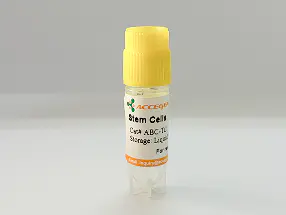
For research use only
| Cat No. | ABC-SC0110T |
| Product Type | Animal Embryonic Stem Cells |
| Cell Type | Stem Cell |
| Species | Mouse |
| Growth Conditions | 37 ℃, 5% CO2 |
| Source Organ | Embryo |
| Disease | Normal |
| Storage | Liquid Nitrogen |
HighQC™ Strain 129 Mouse Embryonic Stem Cell is ideal for developmental biology, germline transmission studies, and genetic modification in mouse models.
HighQC™ Strain 129 Mouse Embryonic Stem Cells (mESCs) are pluripotent stem cells derived from the inner cell mass of strain 129 mouse blastocysts at 3.5 days post coitus. Morphologically, they typically form compact colonies composed of small cells and may exhibit features characteristic of embryonic stem cells, such as a high nucleus-to-cytoplasm ratio and visible nucleoli. These mouse embryonic stem cells express SSEA-4. Functionally, they are capable of undergoing spontaneous as well as directed differentiation into derivatives of the three germ layers—ectoderm, mesoderm, and endoderm—consistent with pluripotent stem cell characteristics. The cells undergo rigorous screening and isolation procedures, and are rigorously tested to ensure they are free of contamination from Mycoplasma, Fungi, Yeast, and Bacteria.
| Product Code | HighQC™ Strain 129 Mouse Embryonic Stem Cell, mESC-129, Mouse ESC Strain 129 |
| Species | Mouse |
| Cat.No | ABC-SC0110T |
| Product Category | Stem Cells |
| Size/Quantity | 1 vial |
| Cell Type | Stem Cell |
| Growth Mode | Adherent |
| Shipping Info | Dry Ice |
| Growth Conditions | 37 ℃, 5% CO2 |
| Source Organ | Embryo |
| Disease | Normal |
| Storage | Liquid Nitrogen |
| Product Type | Animal Embryonic Stem Cells |
HighQC™ Strain 129 Mouse Embryonic Stem Cells, derived from mouse strain 129 (also referred to as the 129 mouse strain and 129 mice), are extensively used in basic research as a classical murine pluripotent stem cell model for studying early embryonic development, pluripotency maintenance, and cell fate determination. Owing to their stable genetic background and robust self-renewal capacity, these cells provide an ideal system for investigating gene function, epigenetic regulation, and signaling pathways that govern stem cell identity and lineage commitment. They are also widely employed in studies of differentiation mechanisms, developmental gene networks, and genome manipulation strategies in a well-established mouse embryonic stem cell platform.
When you publish your research, please cite our product as "AcceGen Biotech Cat.# XXX-0000". In return, we’ll give you a $200 coupon. Simply click here and submit your paper’s PubMed ID (PMID).