



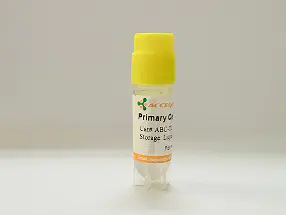
For research use only
| Cat No. | ABC-TC3474 |
| Product Type | Other Animal Primary Cells |
| Cell Type | Red Blood Cell |
| Species | Horse |
| Growth Conditions | 37 ℃, 5% CO2 |
| Source Organ | Blood |
| Disease | Normal |
| Storage | Liquid Nitrogen |
Horse Red Blood Cells enable hemocompatibility assays, drug-RBC interaction testing, and preclinical safety evaluation in hematology research.
Horse Red Blood Cells are purified erythrocyte preparations derived from horse whole blood through comprehensive washing procedures that remove the platelet-rich plasma, buffy coat layer, and leukocytes. These terminally differentiated cells lack nuclei and organelles, exhibit a characteristic biconcave disc morphology of mature mammalian erythrocytes, and contain high-purity hemoglobin optimized for gas exchange. Functionally, they transport oxygen bound to hemoglobin and facilitate CO2 removal. Studies link equine erythrocyte dysfunction to equine infectious anemia (EIA) and piroplasmosis. Unlike nucleated cells, these horse cells cannot proliferate or be passaged due to terminal differentiation. Cells are prepared in CPDA-1 anticoagulant and optionally leukocyte-reduced. Repeated freezing and thawing should be avoided during culture. The cells undergo rigorous screening and isolation procedures, and are rigorously tested to ensure they are free of contamination from Mycoplasma, Fungi, Yeast, and Bacteria.
| Product Code | Horse RBCs, Equine Red Blood Cells, Horse Erythrocytes, Equine RBC, Horse Blood Erythrocytes |
| Species | Horse |
| Cat.No | ABC-TC3474 |
| Product Category | Primary Cells |
| Size/Quantity | 1 vial |
| Cell Type | Red Blood Cell |
| Growth Mode | Suspension |
| Shipping Info | Dry Ice |
| Growth Conditions | 37 ℃, 5% CO2 |
| Source Organ | Blood |
| Disease | Normal |
| Biosafety Level | 1 |
| Storage | Liquid Nitrogen |
| Product Type | Other Animal Primary Cells |
| Quality Control | All cells test negative for mycoplasma, bacteria, yeast, and fungi. |
Horse Red Blood Cells serve as essential in vitro tools for studying hemolytic mechanisms in equine-specific diseases such as babesiosis and equine infectious anemia (EIA). The cells are particularly valuable for investigating the molecular mechanisms of Babesia caballi invasion through interactions thought to involve band 3 membrane glycoproteins. They also enable detailed study of oxidative damage pathways in horse infectious anemia and analysis of species-specific erythrocyte lysis patterns and oxidative damage. Their authentic biological properties make them indispensable for studying host-pathogen interactions unique to equine medicine.
When you publish your research, please cite our product as “AcceGen Biotech Cat.# XXX-0000”. In return, we’ll give you a $200 coupon. Simply click here and submit your paper’s PubMed ID (PMID).