



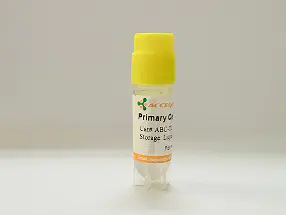
For research use only
| Cat No. | ABC-TC3448 |
| Product Type | Bronchial/Tracheal Cells |
| Cell Type | Epithelial |
| Species | Human |
| Growth Conditions | 37 ℃, 5% CO2 |
| Source Organ | Bronchial/Tracheal |
| Disease | Normal |
| Storage | Liquid Nitrogen |
Human Bronchial/Tracheal Epithelial Cells provide a model for respiratory epithelial function, airway disease modeling, and drug transport studies.
Human Bronchial/Tracheal Epithelial Cells are primarily derived from human bronchial or tracheal tissues. Morphologically, these cells exhibit a polygonal or elongated shape and possess typical epithelial cell characteristics. These cells express molecules such as epithelial cell adhesion molecules (E-cadherin) and tight junction proteins (ZO-1), which play crucial roles in maintaining cell morphology, barrier function, and ciliary movement. The primary functions of these cells include mucus secretion and ciliary beating, which help clear harmful substances such as dust and bacteria from the respiratory tract, making them an important model for investigating tracheal epithelium in disease and elucidating the mechanisms regulating airway ciliary function. Each lot undergoes rigorous screening and isolation procedures, and is rigorously tested to ensure it is free of contamination from HIV-1, HBV, HCV, Syphilis, Mycoplasma, Fungi, Yeast, and Bacteria.
| Product Code | Human Bronchial Epithelial Cells, Human Tracheal Epithelial Cells, Human Airway Epithelial Cells, HBECs, HTECs |
| Species | Human |
| Cat.No | ABC-TC3448 |
| Product Category | Primary Cells |
| Size/Quantity | 1 vial |
| Cell Type | Epithelial |
| Growth Mode | Adherent |
| Shipping Info | Dry Ice |
| Growth Conditions | 37 ℃, 5% CO2 |
| Source Organ | Bronchial/Tracheal |
| Disease | Normal |
| Biosafety Level | 1 |
| Storage | Liquid Nitrogen |
| Product Type | Bronchial/Tracheal Cells |
| Quality Control | All cells test negative for mycoplasma, bacteria, yeast, and fungi. |
Human Bronchial/Tracheal Epithelial Cells can be utilized to investigate respiratory epithelial biology, including barrier function, ciliary activity, and responses to environmental stimuli. In the field of drug development, these cells are valuable for toxicity and efficacy testing of new drugs, enabling the evaluation of their damaging or protective effects on respiratory epithelial cells and thus accelerating the drug screening process.
When you publish your research, please cite our product as “AcceGen Biotech Cat.# XXX-0000”. In return, we’ll give you a $200 coupon. Simply click here and submit your paper’s PubMed ID (PMID).