
For research use only
| Cat No. | ABC-TC4309 |
| Product Type | Blood Products |
| Cell Type | Leukopak |
| Species | Human |
| Growth Conditions | 37 ℃, 5% CO2 |
| Disease | Psoriasis |
| Storage | 4℃ |
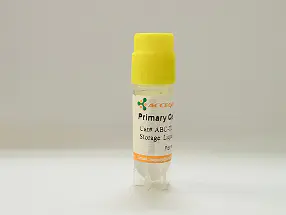
Human Psoriasis Leukopak offers a model to study immune and inflammatory pathways involved in psoriasis and other inflammatory skin conditions.
Human Psoriasis Leukopak is isolated via leukapheresis from individuals with psoriasis, an immune-mediated skin disease involving T cell dysregulation and chronic inflammation. The cells exhibit suspension growth. Following isolation, cells are cryopreserved. This product is well-suited for studying cytokine-targeting biologics, immune cell signaling, and transcriptomic profiling to understand disease heterogeneity. Repeated freezing and thawing should be avoided. Each lot undergoes rigorous screening and isolation procedures, and is rigorously tested to ensure it is free of contamination from HIV-1, HBV, HCV, Syphilis, Mycoplasma, Fungi, Yeast, and Bacteria.
| Product Code | Human Psoriasis Leukopak, hPsoriasis-Leukopak, Leukopak from Psoriasis Patients |
| Species | Human |
| Cat.No | ABC-TC4309 |
| Product Category | Primary Cells |
| Size/Quantity | 1 pack |
| Cell Type | Leukopak |
| Growth Mode | Suspension |
| Shipping Info | Ice pack |
| Growth Conditions | 37 ℃, 5% CO2 |
| Disease | Psoriasis |
| Storage | 4℃ |
| Product Type | Blood Products |
| Quality Control | All cells test negative for mycoplasma, bacteria, yeast, and fungi. |
Human Psoriasis Leukopak supplies abundant immune cells from psoriasis patients, enabling mechanistic studies of Th1/Th17 pathways, skin inflammation, and immune regulation. It supports evaluation of targeted biologics, cytokine modulation strategies, and transcriptomic profiling. This model is especially valuable in translational dermatology and inflammatory disease research focused on systemic immune contributions.
When you publish your research, please cite our product as “AcceGen Biotech Cat.# XXX-0000”. In return, we’ll give you a $200 coupon. Simply click here and submit your paper’s PubMed ID (PMID).