



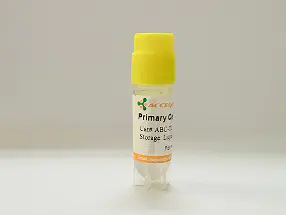
For research use only
| Cat No. | ABC-TC153G |
| Product Type | Human Primary Cells |
| Cell Type | Fibroblasts/Stromal Cells |
| Species | Human |
| Growth Conditions | 37 ℃, 5% CO2 |
| Source Organ | Vaginal |
| Disease | Normal |
| Storage | Liquid Nitrogen |
Human vaginal fibroblasts for reproductive biology, wound healing, ECM remodeling, pelvic floor disorders and biomaterial research, human stromal cell model.
Human Vaginal Fibroblasts are derived from human vaginal tissue. Vaginal fibroblasts are stromal connective tissue cells that contribute to extracellular matrix production, tissue repair, and maintenance of vaginal structural integrity. Following primary isolation and culture, these cells are cryopreserved for research applications. Vaginal fibroblasts are involved in collagen synthesis, wound healing, inflammatory responses, and regulation of the local tissue microenvironment. These cells have been reported to express fibroblast-associated markers such as vimentin, fibronectin, and collagen type I. In vitro, the cells exhibit adherent growth with elongated spindle-shaped morphology. Human vaginal fibroblasts are commonly used in reproductive biology, tissue remodeling studies, pelvic floor disorder research, and biomaterial evaluation. Each lot undergoes rigorous screening and isolation procedures, and is rigorously tested to ensure it is free of contamination from HIV-1, HBV, HCV, syphilis, mycoplasma, fungi, yeast, and bacteria.
| Product Code | HVF, Human Vaginal Stromal Cells, Human Reproductive Fibroblasts |
| Species | Human |
| Cat.No | ABC-TC153G |
| Product Category | Primary Cells |
| Size/Quantity | 1 vial |
| Cell Type | Fibroblasts/Stromal Cells |
| Growth Mode | Adherent |
| Shipping Info | Dry Ice |
| Growth Conditions | 37 ℃, 5% CO2 |
| Source Organ | Vaginal |
| Disease | Normal |
| Biosafety Level | 1 |
| Storage | Liquid Nitrogen |
| Product Type | Human Primary Cells |
| Quality Control | All cells test negative for mycoplasma, bacteria, yeast, and fungi. |
Human Vaginal Fibroblasts are commonly used in reproductive biology, wound healing studies, extracellular matrix remodeling, and biomaterial evaluation. Human Vaginal Fibroblasts are also valuable for investigating vaginal tissue repair, inflammatory responses, and cellular interactions within the reproductive microenvironment.