



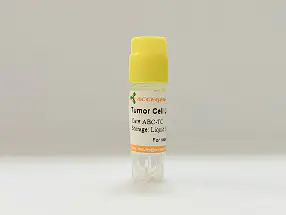
For research use only
| Cat No. | ABC-TC0439 |
| Product Type | Human Sarcoma Cell Lines |
| Species | Human |
| Growth Conditions | 37 ℃, 5% CO2 |
| Disease | Osteosarcoma |
| Product Code | HUO9N2; HuO 9N2; O9N2 |
Osteosarcoma. Tumorigenic cell line. Growth rate is very slow.
HuO9N2 is a human osteosarcoma tumor cell line established from the in situ bone tissue of the right distal femur of a 13-year-old female patient following two passages in athymic nude mice. It displays a polygonal, adherent morphology and a very slow growth rate with a long doubling time (~5 days) compared with many other cancer lines. HuO9N2 cell line was derived from the same donor tumor as the related HuO9 cell line and established after two passages in athymic nude mice. HuO9N2 cells express 1,25-dihydroxyvitamin D3-responsive alkaline phosphatase activity. Such functional traits make HuO9N2 a relevant model of human osteosarcoma for mechanistic studies. The cells undergo rigorous screening and isolation procedures, and are rigorously tested to ensure they are free of contamination from HIV-1, HBV, HCV, Syphilis, Mycoplasma, Fungi, Yeast, and Bacteria.
| Product Code | HUO9N2; HuO 9N2; O9N2 |
| Species | Human |
| Cat.No | ABC-TC0439 |
| Product Category | Tumor Cell Lines |
| Size/Quantity | 1 vial |
| Shipping Info | Dry Ice |
| Growth Conditions | 37 ℃, 5% CO2 |
| Disease | Osteosarcoma |
| Biosafety Level | 1 |
| Storage | Liquid Nitrogen |
| Product Type | Human Sarcoma Cell Lines |
HuO9N2 cell line is used as an in vitro model of human osteosarcoma for studying tumor cell proliferation, osteoblastic differentiation responses (e.g., vitamin D3-responsive alkaline phosphatase activity), and drug sensitivity mechanisms. The cells support investigations into signal transduction related to osteosarcoma biology and preclinical evaluation of therapeutic agents relevant to bone cancer research.
When you publish your research, please cite our product as “AcceGen Biotech Cat.# XXX-0000”. In return, we’ll give you a $200 coupon. Simply click here and submit your paper’s PubMed ID (PMID).