



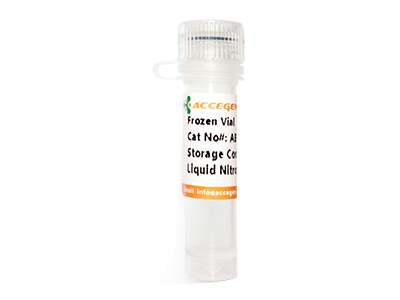
For research use only
| Cat No. | ABC-RC113F |
| Product Type | Reporter Stable Cell Lines |
| Cell Type | T Lymphoblast |
| Species | Human |
| Host Cell | Jurkat |
| Source Organ | Blood |
| Disease | Acute T Cell Leukemia |
| Storage | Liquid Nitrogen |
HVEM Reporter Jurkat Cell Line provides a T-cell model to investigate immune checkpoint signaling, TNFR superfamily interactions, and drug screening.
HVEM (TNFRSF14) is a member of the tumor necrosis factor (TNF) receptor family, a transmembrane protein characterized by multiple cysteine-rich domains (CRD) in its structure. HVEM is widely expressed on various immune cells, including dendritic cells, naïve T cells, B cells, NK cells, monocytes, and neutrophils.HVEM has multiple ligands such as BTLA, CD160, LIGHT, and lymphotoxin-α (LTα). By interacting with these ligands, HVEM activates pro-inflammatory signaling pathways.The HVEM Reporter Jurkat Cell Line is a luciferase reporter cell line constructed based on the mechanism of action. When BTLA binds to HVEM, it activates downstream signaling pathways, leading to the expression of luciferase, a process that can be blocked by antibodies with a blocking effect. Luciferase readings indicate the activation effect of the signaling pathway and can be used to evaluate the in vitro effects of HVEM agonists, BTLA, HVEM antagonists, and other drugs.
| Species | Human |
| Cat.No | ABC-RC113F |
| Quality Control | All cells test negative for mycoplasma, bacteria, yeast, and fungi. |
| Product Category | Transfected Stable Cell Lines |
| Size/Quantity | 1 vial |
| Cell Type | T Lymphoblast |
| Growth Mode | Suspension |
| Shipping Info | Dry Ice |
| Growth Conditions | 37 ℃, 5% CO2 |
| Source Organ | Blood |
| Disease | Acute T Cell Leukemia |
| Biosafety Level | 1 |
| Storage | Liquid Nitrogen |
| Product Type | Reporter Stable Cell Lines |
| Host Cell | Jurkat |
For research use only
When you publish your research, please cite our product as “AcceGen Biotech Cat.# XXX-0000”. In return, we’ll give you a $100 coupon. Simply click here and submit your paper’s PubMed ID (PMID).