



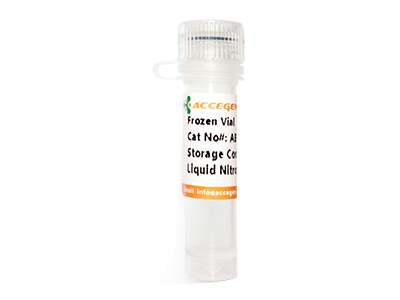
For research use only
| Cat No. | ABC-H0041X |
| Product Type | Immortalized Cell Line |
| Cell Type | Fibroblast |
| Species | Human |
| Growth Conditions | 37 ℃, 5% CO2 |
| Source Organ | Intestine |
| Disease | Normal |
| Storage | Liquid Nitrogen |
Advance Immortalized Human Intestine Fibroblasts to study epithelial–stromal interactions, fibrosis, and intestinal inflammation in chronic diseases.
Immortalized Human Intestine Fibroblasts are derived from normal human intestinal tissue and modified—typically via hTERT or SV40 large T antigen—to overcome replicative senescence while preserving physiological functions. These spindle-shaped, adherent cells contribute to epithelial support, extracellular matrix remodeling, and mucosal immune regulation. They consistently express characteristic fibroblast markers including vimentin, collagen type I, and fibronectin, while also demonstrating functional responsiveness through secretion of cytokines like IL-6 and TGF-β, particularly under inflammatory stimulation. By facilitating epithelial-mesenchymal crosstalk, these human fibroblast cell lines serve as a robust model for investigating intestinal fibrosis, inflammatory bowel diseases (IBD), and tumor–stroma interactions in colorectal cancer. Their stable phenotype and extended lifespan make them well-suited for long-term co-culture, mechanistic studies, and drug screening applications.
| Species | Human |
| Cat.No | ABC-H0041X |
| Product Category | Immortalized Cell Lines |
| Size/Quantity | 1 vial |
| Cell Type | Fibroblast |
| Growth Mode | Adherent |
| Shipping Info | Dry Ice |
| Growth Conditions | 37 ℃, 5% CO2 |
| Source Organ | Intestine |
| Disease | Normal |
| Biosafety Level | 1 |
| Storage | Liquid Nitrogen |
| Product Type | Immortalized Cell Line |
| Quality Control | All cells test negative for mycoplasma, bacteria, yeast, and fungi. |
Immortalized Human Intestine Fibroblasts provide a physiologically relevant in vitro model for studying intestinal fibroblast biology and the pathogenesis of gastrointestinal diseases. They support research into gut tissue architecture, extracellular matrix remodeling, and epithelial-mesenchymal crosstalk, and involve in studying the small intestine physiology and also the mechanisms of carcinogenesis. These cells are also employed in high-throughput drug screening platforms, accelerating the discovery of therapies for inflammatory bowel diseases (IBD), intestinal fibrosis, and colorectal cancer stromal interactions.
When you publish your research, please cite our product as “AcceGen Biotech Cat.# XXX-0000”. In return, we’ll give you a $200 coupon. Simply click here and submit your paper’s PubMed ID (PMID).