



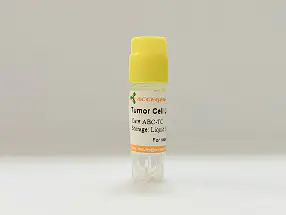
For research use only
| Cat No. | ABC-TC0568 |
| Product Type | Rat Lung Cell Lines |
| Cell Type | Epithelial |
| Species | Rat – Female, Adult |
| Growth Conditions | 37 ℃, 5% CO2 |
| Source Organ | Lung |
| Disease | Normal |
| Product Code | L-2 |
Tumorigenecity: Isoenzyme: Histopathology: normalSubculture: Split ratio: Media change: Reverse transcritase: Production
L2 is a spontaneously immortalized epithelial cell line derived from the lung tissue of an adult female Lewis rat (Rattus norvegicus). L2 cells exhibit epithelial-like characteristics and adherent growth under standard in vitro culture conditions. L2 has a stable karyotype (modal chromosome number 77; ranging from 49 to 85) consistent with immortalization, yet maintains contact inhibition. The cells express epithelial markers (cytokeratins). No known oncogenic mutations have been associated with this line, and it is classified as biosafety level 1. As a normal lung epithelial model, L2 does not form tumors in vivo and lacks metastatic behavior. The cells undergo rigorous screening and isolation procedures, and are rigorously tested to ensure they are free of contamination from mycoplasma, fungi, yeast, and bacteria.
| Product Code | L-2 |
| Species | Rat – Female, Adult |
| Cat.No | ABC-TC0568 |
| Product Category | Tumor Cell Lines |
| Size/Quantity | 1 vial |
| Cell Type | Epithelial |
| Growth Mode | Adherent |
| Shipping Info | Dry Ice |
| Growth Conditions | 37 ℃, 5% CO2 |
| Source Organ | Lung |
| Disease | Normal |
| Biosafety Level | 1 |
| Storage | Liquid Nitrogen |
| Product Type | Rat Lung Cell Lines |
L2 cells serve as a normal lung epithelial model in vitro for respiratory physiology, toxicology, barrier function, and drug delivery studies. Their stable, non-tumorigenic phenotype and retention of epithelial markers allow reliable assessment of environmental pollutant effects and epithelial regeneration assays. The adherent, monolayer growth makes them suitable for permeability studies, ciliary function testing, and high‑throughput screening of inhaled therapeutic compounds. L2 is also used in co-culture models with immune or mesenchymal cells to simulate lung microenvironments under normal or stress-induced conditions.
When you publish your research, please cite our product as “AcceGen Biotech Cat.# XXX-0000”. In return, we’ll give you a $200 coupon. Simply click here and submit your paper’s PubMed ID (PMID).