




For research use only
| Cat No. | ABC-TC478S |
| Product Type | Human Leukemia Cell Lines |
| Species | Human |
| Growth Conditions | 37 ℃, 5% CO2 |
| Disease | Acute Monocytic Leukemia |
| Product Code | MONO-MAC-6; Mono-mac-6; MONO-MAC 6; Mono Mac 6; Mono Mac6; MonoMac 6; MonoMac6; MONOMAC6; MM6 |
MONO-MAC-6 AML cells show t(9;11) and MLL-AF9, express CD14/HLA-DR, secrete TNF-α, and are used in leukemia, inflammation, and LPS-response studies.
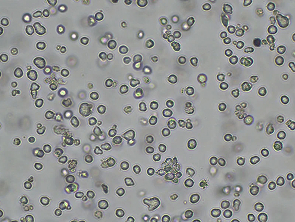
MONO-MAC-6 is a human monocytic cell line derived from the peripheral blood of a male patient with acute monocytic leukemia (AML-M5). This cell line is a proliferative model of the monocyte-macrophage lineage, maintaining stable growth under in vitro conditions. The cells display a monocytic morphology, appearing as single, round-to-pleomorphic forms with prominent cytoplasmic granules, and grow in semi-adherent suspension culture with occasional loose aggregates. MONO-MAC-6 expresses key monocyte markers such as CD14, CD11b, HLA-DR, and CD33, confirmed by flow cytometry. Functionally, the cells demonstrate phagocytosis, secretion of proinflammatory cytokines like TNF-α and IL-1β responding to stimuli such as LPS and PMA. These cells are ideal for studying inflammation, immune modulation, and leukemia pathogenesis. Karyotype analysis shows chromosomal abnormalities typical of leukemic origin. MONO-MAC-6 is immortalized, stably passaged under standard conditions. As a MAC-6 derivative, MONO-MAC-6 is also utilized in studies involving MACS cells within monocyte-focused research.
| Product Code | MONO-MAC-6; Mono-mac-6; MONO-MAC 6; Mono Mac 6; Mono Mac6; MonoMac 6; MonoMac6; MONOMAC6; MM6 |
| Species | Human |
| Cat.No | ABC-TC478S |
| Product Category | Tumor Cell Lines |
| Size/Quantity | 1 vial |
| Shipping Info | Dry Ice |
| Growth Conditions | 37 ℃, 5% CO2 |
| Disease | Acute Monocytic Leukemia |
| Biosafety Level | 1 |
| Storage | Liquid Nitrogen |
| Product Type | Human Leukemia Cell Lines |
| Key Features | – Backed by AcceGen advanced technology – Cryopreserved for highest viability and plating efficiency – Quality-guaranteed for accurate results – Timely technical support for best experimental outcomes |
| Quality Control | All cell lots test negative for HIV-1, HBV, HCV, mycoplasma, yeast, fungi, and other pathogens. |
MONO-MAC-6 serves as a valuable model for in vitro studies of monocyte biology and physiology. It is also used for cytogenetic analysis of gene translocation, gene expression profiling, drug screening assay and testing response towards various molecules.
When you publish your research, please cite our product as “AcceGen Biotech Cat.# XXX-0000”. In return, we’ll give you a $200 coupon. Simply click here and submit your paper’s PubMed ID (PMID).
Bruno JG, Sivils JC, Mohan S, Natarajan M. Alpha-thiol deoxynucleotide triphosphates (S-dNTPs) as radioprotective agents: A novel approach. Biochemical and Biophysical Research Communications. 2023;660:6-12. doi:10.1016/j.bbrc.2023.03.071
Gentle Handling: Use a serological pipette to gently resuspend cells. Avoid vigorous pipetting to prevent mechanical stress.
Passage Protocol: Collect cells by transferring the culture medium (containing suspended cells) to a centrifuge tube. Centrifuge at 300×g for 5-10 minutes. Aspirate the supernatant carefully and resuspend the cell pellet in fresh pre-warmed complete medium. Seed the cells at the desired density into new culture flasks.
Macrophage Markers: CD11b, CD14, CD68, and F4/80.
Dendritic Cell Markers: CD11c, HLA-DR, CD80, CD83, and CD86.
Flow Cytometry: Use flow cytometry to quantify the expression of these surface markers.
RT-PCR and Western Blot: Assess gene and protein expression levels of differentiation markers.
Issue 1: Poor Differentiation
Solution: Ensure the correct concentration and timing of differentiation factors. Validate the activity of the growth factors or supplements.
Issue 2: Cell Death
Solution: Optimize the concentration of differentiation agents and minimize handling stress. Ensure proper medium composition and culture conditions.
Issue 3: Heterogeneous Differentiation
Solution: Sort differentiated cells using flow cytometry to obtain a more homogeneous population.