


• Ready-to-Use Models. Faster Immunotherapy Research. | Save Up to 25%

    Learn More
Tumor Cell Lines

NIH: OVCAR-3

  • For research use only

Cat No.

ABC-TC0827

Product Type

Human Ovarian Cancer Cell Lines

Cell Type

Epithelial

Species

Human

Growth Conditions

37 ℃, 5% CO2

Source Organ

Ovary

Disease

Adenocarinoma

Product Code

Ovcar-3; OVCAR 3; OVCAR.3; NIH:OVCAR-3; NIH:Ovcar-3; NIH:OVCAR3; NIH-OVCAR-3; NIHOVCAR3; OVCAR3; Ovcar3

NIH: OVCAR-3 cell line is a widely used ovarian cancer model for studying chemotherapy resistance, tumor progression, and drug response mechanisms.

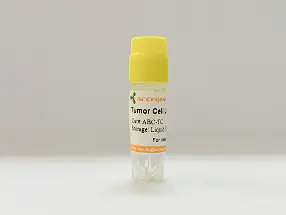
Product Image

Description

The ovcar3 cell line is a human ovarian adenocarcinoma cell line established in 1982 from the malignant ascites of a patient with progressive ovarian adenocarcinoma after combination chemotherapy with cyclophosphamide, Adriamycin, and cisplatin. OVCAR-3 cells exhibit an epithelial morphology and grow as an adherent, cobblestone-like monolayer with areas of multilayering. The cell line has an abnormal aneuploid karyotype and expresses androgen and estrogen receptors. Progesterone receptor expression has also been investigated in OVCAR-3-associated ovarian cancer models, including studies of estrogen-induced receptor expression. OVCAR-3 showed resistance to clinically relevant concentrations of Adriamycin, melphalan, and cisplatin in the original characterization, supporting its use as a model for investigating ovarian cancer drug response and resistance. These characteristics make the ovcar3 cell line an established in vitro model for ovarian cancer biology and therapeutic research.

Product Code

Ovcar-3; OVCAR 3; OVCAR.3; NIH:OVCAR-3; NIH:Ovcar-3; NIH:OVCAR3; NIH-OVCAR-3; NIHOVCAR3; OVCAR3; Ovcar3

Species

Human

Cat.No

ABC-TC0827

Product Category

Tumor Cell Lines

Size/Quantity

1 vial

Cell Type

Epithelial

Growth Mode

Adherent

Shipping Info

Dry Ice

Growth Conditions

37 ℃, 5% CO2

Source Organ

Ovary

Disease

Adenocarinoma

Biosafety Level

1

Storage

Liquid Nitrogen

Product Type

Human Ovarian Cancer Cell Lines

Application

  • The OVCAR-3 cell line can be used to investigate ovarian cancer cell biology, drug response, cytotoxicity, hormone receptor-associated signaling, and mechanisms of chemotherapy resistance. Its androgen and estrogen receptor expression provides a model for investigating hormone receptor-associated characteristics and signaling in ovarian cancer cells. OVCAR-3 has also been used in studies of cisplatin resistance, including comparisons between parental OVCAR-3 cells and experimentally derived cisplatin-resistant sublines to investigate changes in drug sensitivity, apoptosis, and signaling pathways. In addition, OVCAR-3-derived cells have been used to establish ovarian cancer xenograft models in immunodeficient mice, including models with ascites, extensive intra-abdominal tumors, and pulmonary metastases, supporting studies of ovarian cancer progression and experimental therapies.

Area of Interest

The ovcar3 cell line supports research focused on ovarian adenocarcinoma biology, therapeutic response, chemotherapy resistance, hormone receptor-associated signaling, and tumor progression. Its epithelial morphology, ovarian adenocarcinoma origin, and characterized androgen and estrogen receptor expression provide a useful cellular model for investigating ovarian cancer-associated phenotypes and treatment responses. OVCAR-3 is particularly relevant to studies of drug resistance because the parental cell line exhibits resistance to several anticancer agents, while experimentally derived OVCAR-3-resistant models have been used to investigate changes in cisplatin sensitivity, apoptosis, and PI3K/AKT-associated signaling. OVCAR-3-derived cells have also been used in vivo to investigate ascites formation, intra-abdominal tumor growth, and metastatic dissemination, providing a model for studying interactions between ovarian cancer cells and the tumor microenvironment.

Workflow Stages

Cell Recovery → Cell Expansion → Phenotypic Characterization → Experimental Treatment or Genetic Manipulation → Cell Viability/Drug Response Analysis → Molecular and Mechanistic Analysis → Optional Xenograft Model Establishment → Therapeutic Response Assessment

Citation

When you publish your research, please cite our product as “AcceGen Biotech Cat.# XXX-0000”. In return, we’ll give you a $200 coupon. Simply click here and submit your paper’s PubMed ID (PMID).
Xu H, George E, Kinose Y, et al. CCNE1 copy number is a biomarker for response to combination WEE1-ATR inhibition in ovarian and endometrial cancer models. Cell Reports Medicine. 2021;2(9):100394. doi:10.1016/j.xcrm.2021.100394

Inquiring NIH: OVCAR-3

We know how valuable your research is to you, but are you wondering what you can expect to pay for quick accurate results every time? Fill out a request in the form below and we’ll get back to you within 24 hours with a quote.
High Viability
To succeed in cell culture
Precision and Reliability
To support a consistent result
Customization Options
Tailed to your research

Tags

AcceGen Scroll Top Button