



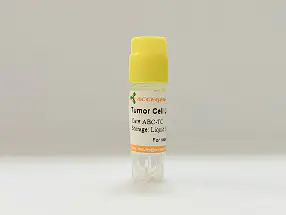
For research use only
| Cat No. | ABC-TC0191 |
| Product Type | Human Ovarian Cancer Cell Lines |
| Species | Human |
| Growth Conditions | 37 ℃, 5% CO2 |
| Source Organ | Ovary |
| Disease | Ovarian Small Cell Cancer |
| Product Code | COV-434; COV 434 |
COV434 ovarian tumor cells lack SMARCA2/4, FSHR⁺, aromatase⁺, low invasiveness, tumorigenic in vivo, perfect for immune-oncology and SCCOHT-like modeling.
The COV434 cell line is a human ovarian cancer cell line established from a solid primary ovarian tumor in a 27-year-old female patient. Originally misclassified as adult granulosa cell tumor (aGCT), genomic profiling later confirmed it as a model for small cell carcinoma of the ovary, hypercalcemic type (SCCOHT). COV434 cells grow as adherent monolayers with polygonal to spindle-shaped morphology and a fibroblast-like appearance. These cells exhibit high proliferative capacity and retain steroidogenic properties, including responsiveness to follicle-stimulating hormone (FSH). They possess a near-diploid karyotype with low chromosomal complexity and show loss of SMARCA4 and SMARCA2, while SMARCB1/INI1 remains intact. They constitutively secrete IL-8, making them valuable for immune-oncology research. In vivo, COV434 cells are tumorigenic and form tumors associated with elevated serum calcium levels—a hallmark of small cell carcinoma of the ovary, hypercalcemic type (SCCOHT). This is due to the secretion of parathyroid hormone-related protein (PTHrP), which leads to humoral hypercalcemia of malignancy (HHM).
| Product Code | COV-434; COV 434 |
| Species | Human |
| Cat.No | ABC-TC0191 |
| Product Category | Tumor Cell Lines |
| Size/Quantity | 1 vial |
| Growth Mode | Adherent |
| Shipping Info | Dry Ice |
| Growth Conditions | 37 ℃, 5% CO2 |
| Source Organ | Ovary |
| Disease | Ovarian Small Cell Cancer |
| Biosafety Level | 1 |
| Storage | Liquid Nitrogen |
| Product Type | Human Ovarian Cancer Cell Lines |
The COV434 cell line is a versatile model for ovarian cancer research, enabling evaluation of therapeutic effects on cell proliferation and survival. It facilitates investigation of signaling pathways driving tumor growth, aiding target identification. COV434 cells also express Toll-like receptors and constitutively secrete IL-8, making them valuable for studying inflammatory and immune responses to pathogen-associated molecular patterns.
When you publish your research, please cite our product as “AcceGen Biotech Cat.# XXX-0000”. In return, we’ll give you a $200 coupon. Simply click here and submit your paper’s PubMed ID (PMID).