




For research use only
| Cat No. | ABC-TC3879 |
| Product Type | Intestinal Cells |
| Cell Type | Epithelial |
| Species | Human |
| Growth Conditions | 37 ℃, 5% CO2 |
| Source Organ | Intestine |
| Disease | Normal |
| Storage | Liquid Nitrogen |
Human Intestinal Epithelial Cells enable investigations of nutrient absorption, barrier integrity, and host–microbiome interactions in gastrointestinal.
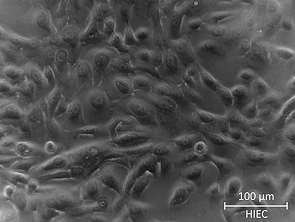
Human Intestinal Epithelial Cells are derived from human intestinal tissue. These cells exhibit a polygonal morphology in vitro and form a polarized monolayer. Beyond their fundamental roles in nutrient absorption and mucus secretion, IECs produce an array of bioactive molecules including antimicrobial peptides (defensins, cathelicidins), immunoregulatory cytokines (IL-10, TGF-β), and enteroendocrine hormones (serotonin, GLP-1) that collectively maintain intestinal homeostasis. These cells form tight junctions and adherens junctions to create a selective barrier, while also sampling luminal contents through specialized microfold (M) cells. They express key epithelial junctional proteins such as ZO-1, claudins, and occludin, essential for barrier integrity. Their dysfunction is implicated in various gastrointestinal pathologies including inflammatory bowel disease (through barrier disruption and aberrant immune activation), colorectal cancer (via Wnt/β-catenin signaling dysregulation), and celiac disease (where gliadin triggers inappropriate immune responses). Within the intestinal epithelium, intestinal epithelial cells encompass multiple intestinal epithelial cell types, and their coordinated activities define overall intestinal epithelial cell function in health and disease.
| Product Code | InEpC |
| Species | Human |
| Cat.No | ABC-TC3879 |
| Product Category | Primary Cells |
| Size/Quantity | 1 vial |
| Cell Type | Epithelial |
| Growth Mode | Adherent |
| Shipping Info | Dry Ice |
| Growth Conditions | 37 ℃, 5% CO2 |
| Source Organ | Intestine |
| Disease | Normal |
| Biosafety Level | 1 |
| Storage | Liquid Nitrogen |
| Product Type | Intestinal Cells |
| Key Features | -Backed by AcceGen advanced technology |
| Quality Control | All cells test negative for mycoplasma, bacteria, yeast, and fungi. |
Human Intestinal Epithelial Cells can be used to establish a reliable epithelial cell culture system to investigate the exact pathogenesis of gastrointestinal diseases. They can also be used to build infection models that help better understand the host-parasite interactions, extracellular matrix–cell interactions, microbiota interfaces, and population screens.
When you publish your research, please cite our product as “AcceGen Biotech Cat.# XXX-0000”. In return, we’ll give you a $200 coupon. Simply click here and submit your paper’s PubMed ID (PMID).
Human Intestinal Epithelial Cells (IECs) are the cells that line the surface of the intestines. They form a barrier between the interior of the intestine and the rest of the body, playing a crucial role in nutrient absorption, immune function, and maintaining the integrity of the intestinal lining.
Human intestinal epithelial cells are isolated from the entire intestine, including the small intestine and the large intestine
Human Intestinal Epithelial Cells are responsible for several key functions, including absorption of nutrients and water, secretion of digestive enzymes and mucus, maintenance of the intestinal barrier, and participation in immune responses by interacting with gut-associated lymphoid tissues.
Human Intestinal Epithelial Cells can typically be passaged 3-5 times. However, with each passage, the characteristics of the epithelial cells gradually change. Therefore, it is generally recommended to use these cells within three passages.
Human Intestinal Epithelial Cells are used in research to study intestinal physiology, pathophysiology, and diseases such as inflammatory bowel disease (IBD), colorectal cancer, and infections. They are also used in drug absorption and toxicity studies, as well as in the development of new therapeutic strategies.