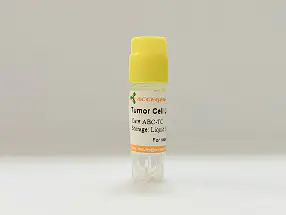
For research use only
| Cat No. | ABC-TC0687 |
| Product Type | Human Gastric Cancer Cell Lines |
| Species | Human |
| Growth Conditions | 37 ℃, 5% CO2 |
| Source Organ | Liver |
| Product Code | MKN-45; MKN 45 |
MKN-45 gastric cancer cells have c-Met amplification, wild-type p53, and E-cadherin mutation, widely used for gastric cancer mechanism and therapy testing.
MKN-45 is a human gastric cancer cell line derived from a poorly differentiated gastric adenocarcinoma. These cells originate from the liver and are widely used in research focused on gastric cancer development and the assessment of therapeutic agents. The MKN-45 cell line exhibits wild-type TP53, homozygous deletions of p16^INK4A (CDKN2A) and p15^INK4B (CDKN2B), amplification of the c-MET oncogene, and epigenetic silencing of E-cadherin (CDH1) via promoter hypermethylation – all hallmarks of its diffuse-type gastric cancer origin. MKN-45 cells exhibit a phenotype that includes both normal and metaplastic gastric mucosa, with retained differentiation capacity. MKN-45 is commonly used to study the molecular mechanisms underlying gastric cancer and evaluate potential treatments. The MKN-45 cell line is also routinely used to subculture cells for experiments requiring consistent growth behavior and reproducible gastric cancer modeling.
| Product Code | MKN-45; MKN 45 |
| Species | Human |
| Cat.No | ABC-TC0687 |
| Product Category | Tumor Cell Lines |
| Size/Quantity | 1 vial |
| Shipping Info | Dry Ice |
| Growth Conditions | 37 ℃, 5% CO2 |
| Source Organ | Liver |
| Biosafety Level | 1 |
| Storage | Liquid Nitrogen |
| Product Type | Human Gastric Cancer Cell Lines |
| Key Features | – Backed by AcceGen advanced technology – Cryopreserved for highest viability and plating efficiency – Quality-guaranteed for accurate results – Timely technical support for best experimental outcomes |
| Quality Control | All cell lots test negative for HIV-1, HBV, HCV, mycoplasma, yeast, fungi, and other pathogens. |
MKN-45 cells serve as a useful model for studying the biology and characteristics of gastric cancer. They can also be used to screen for potential drugs or underlying mechanisms of gastric cancer and the immunological pathways associated with it.
When you publish your research, please cite our product as “AcceGen Biotech Cat.# XXX-0000”. In return, we’ll give you a $200 coupon. Simply click here and submit your paper’s PubMed ID (PMID).
Bezdan D, Grigorev K, Meydan C, et al. Cell-free DNA (cfDNA) and Exosome Profiling from a Year-Long Human Spaceflight Reveals Circulating Biomarkers. iScience. 2020;23(12):101844. Published 2020 Nov 25. doi:10.1016/j.isci.2020.101844
Hoshino A, Kim HS, Bojmar L, et al. Extracellular vesicle and particle biomarkers define multiple human cancers. Cell. 2020;182(4):1044-1061.e18. doi:10.1016/j.cell.2020.07.009
Liu L, Wang L, Liu L, et al. Acyltransferase zinc finger DHHC-type containing 2 aggravates gastric carcinoma growth by targeting Nrf2 signaling: A mechanism-based multicombination bionic nano-drug therapy. Redox Biology. 2024;70:103051. doi:10.1016/j.redox.2024.103051
MKN-45 cells are a human gastric adenocarcinoma cell line commonly used in gastric cancer research, drug screening, and anti-cancer therapy studies.
Thawing cells: Quickly thaw frozen cells in a 37°C water bath for no more than 2 minutes. Gradually transfer the cells into pre-warmed RPMI 1640 complete medium with 10% fetal bovine serum (FBS).
Seeding cells: Transfer the cell suspension to a culture flask and incubate at 37°C in a 5% CO₂ incubator.
Collecting cells:
Suspension cells: MKN-45 cells are partially adherent and partially in suspension. Gently shake the flask to evenly distribute the suspension cells.
Adherent cells: Use trypsin to detach adherent cells. First, remove the old medium and add a small amount of trypsin solution to cover the cells, then incubate at 37°C for 1-2 minutes.
Stopping trypsinization: Add fresh pre-warmed complete medium to neutralize the trypsin, and gently pipette up and down to detach the cells completely.
Centrifugation: Transfer the cell suspension to a centrifuge tube and centrifuge at 300xg for 5 minutes.
Resuspending cells: Carefully remove the supernatant and resuspend the cell pellet in pre-warmed complete medium.
Seeding new flasks: Dilute the cell suspension to the desired density and seed into new culture flasks.
Regularly observe cell morphology under a microscope, noting any changes in shape, confluency, and the presence of abnormal cells or contaminants.