



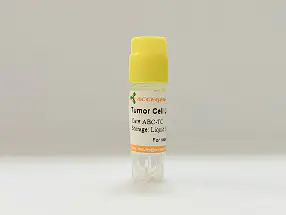
For research use only
| Cat No. | ABC-TC5591 |
| Product Type | Human Esophageal Cancer Cell Lines |
| Cell Type | Epithelial |
| Species | Human |
| Growth Conditions | 37 ℃, 5% CO2 |
| Source Organ | Oesophagus |
| Disease | Oesophageal Cancer |
| Product Code | OE-19; JROECL 19; JROECL19; OEC19 |
Enable OE19 for gastroesophageal cancer research, drug testing, and biomarker discovery in gastric cardia and esophageal adenocarcinoma studies.
The cell line OE19, also known as JROECL19, was established in 1993 from an adenocarcinoma of gastric cardia/oesophageal gastric junction of a 72 year old male patient. The tumour was identified as pathological stage III (UICC) and showed moderate differentiation. The cell line OE19 expresses HLA-A, -B and -C antigens (MHC class I) constitutively. Treatment with IFN-gamma induced the expression of ICAM-1 (CD54). Expression of HLA-DR (MHC class II) on IFN-gamma addition was only measured in a sub-population of OE19. The cells express epithelial cytokeratins and are tumourigenic in nude mice.The Y chromosome could not be detected in this cell line by short tandem repeat (STR)-PCR analysis when tested at ECACC. It is a known phenomenon that due to the increased genetic instability of cancer cell lines the Y chromosome can be rearranged or lost resulting in lack of detection. The cell line is identical to the source provided by the depositor based on the STR-PCR analysis.
| Product Code | OE-19; JROECL 19; JROECL19; OEC19 |
| Species | Human |
| Cat.No | ABC-TC5591 |
| Product Category | Tumor Cell Lines |
| Size/Quantity | 1 vial |
| Cell Type | Epithelial |
| Growth Mode | Adherent |
| Shipping Info | Dry Ice |
| Growth Conditions | 37 ℃, 5% CO2 |
| Source Organ | Oesophagus |
| Disease | Oesophageal Cancer |
| Biosafety Level | 1 |
| Storage | Liquid Nitrogen |
| Product Type | Human Esophageal Cancer Cell Lines |
When you publish your research, please cite our product as “AcceGen Biotech Cat.# XXX-0000”. In return, we’ll give you a $200 coupon. Simply click here and submit your paper’s PubMed ID (PMID).