



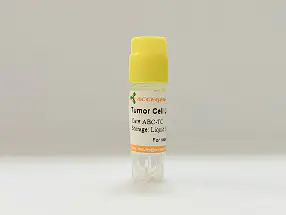
For research use only
| Cat No. | ABC-TC0877 |
| Product Type | Human Tongue Cancer Cell Lines |
| Species | Human |
| Growth Conditions | 37 ℃, 5% CO2 |
| Source Organ | Tongue |
| Product Code | OSC19; Osc19 |
The OSC-19 cell line is a human oral squamous carcinoma model applied in the cancer research, metastasis studies, and therapeutic development.
OSC-19 is a human oral squamous cell cancer cell line that was originally isolated from the tongue tissue of a 61-year-old East Asian male patient with tongue squamous cell carcinoma. Morphologically, OSC-19 cells are polygonal with irregular borders, abundant cytoplasm, and prominent nuclei, reflecting typical squamous cell features. Cytogenetic analysis shows aneuploidy and chromosomal abnormalities, common in oral carcinomas. Gene expression profiling indicates elevated levels of genes associated with cell adhesion, invasion, and epithelial-mesenchymal transition (EMT), such as E-cadherin and vimentin. OSC-19 demonstrates strong tumorigenicity in vivo, forming aggressive tumors when implanted into immunodeficient mice. The cells also display metastatic capability, with potential to invade surrounding tissues and metastasize to lymph nodes. OSC-19 is widely used as a model to study oral cancer biology, invasion mechanisms, and therapeutic interventions.
| Product Code | OSC19; Osc19 |
| Species | Human |
| Cat.No | ABC-TC0877 |
| Product Category | Tumor Cell Lines |
| Size/Quantity | 1 vial |
| Shipping Info | Dry Ice |
| Growth Conditions | 37 ℃, 5% CO2 |
| Source Organ | Tongue |
| Biosafety Level | 1 |
| Storage | Liquid Nitrogen |
| Product Type | Human Tongue Cancer Cell Lines |
The OSC-19 cell line offers diverse research applications, primarily serving as an in vitro invasion model to investigate the mechanisms driving invasive behavior in oral cancers. It is widely used to explore malignant transformation processes and to evaluate the cytotoxic effects of various compounds on human tongue squamous carcinoma cells. Additionally, OSC-19 facilitates the dissection of key signaling pathways involved in oral cancer invasion and metastasis. This makes it an important tool for identifying critical factors and developing innovative therapies, including siRNA-based strategies, thereby advancing the field of oral cancer research.
When you publish your research, please cite our product as “AcceGen Biotech Cat.# XXX-0000”. In return, we’ll give you a $200 coupon. Simply click here and submit your paper’s PubMed ID (PMID).