



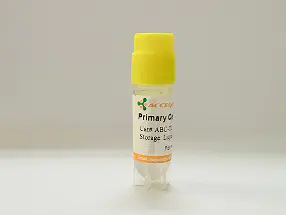
For research use only
| Cat No. | ABC-FC0046 |
| Product Type | Nervous Cells |
| Cell Type | Neuron |
| Species | Human |
| Growth Conditions | 37 ℃, 5% CO2 |
| Source Organ | Brain |
| Disease | Normal |
| Storage | Liquid Nitrogen |
RFP-Human Dopaminergic Neuron Cells are TH-positive, puromycin-selected neurons after lentiviral RFP transduction, enabling live imaging and drug testing.
Human dopaminergic neuronal cells are isolated from fetal brain tissue obtained from agencies authorized to procure and distribute tissues for research. Dopaminergic neuronal cells are selected in tyrosine free medium supplemented with a mixture of growth factors. Actively growing population of cells are tested for tyrosine hydroxylase (TH) expression by immunocytochemistry. RFP-Expressing Human dopaminergic neuronal cells (RFP-HDaNCs) are selected by puromycin after HDaNCs are infected with lentiviruses expressing RFP. Cells are provided with more than 5×10[5] cells/ vial at passage 2. The cells are grown in regular tissue culture dishes and subcultured at a split ratio of 1 to 2 at confluence. We recommend not to use the cells beyond 4 passages. There may be a significant decrease in the number of tyrosine hydroxylase positive cells after 4 passages as they are not maintained in selective medium to allow the growth of only cells expressing tyrosine hydroxylase.
| Product Code | RFP-Human Dopaminergic Neuron Cells, RFP-DA Neurons, mCherry-hDA Neurons, Red Dopaminergic Neurons, RFP-hDAN |
| Species | Human |
| Cat.No | ABC-FC0046 |
| Product Category | Primary Cells |
| Size/Quantity | 1 vial |
| Cell Type | Neuron |
| Growth Mode | Adherent |
| Shipping Info | Dry Ice |
| Growth Conditions | 37 ℃, 5% CO2 |
| Source Organ | Brain |
| Disease | Normal |
| Storage | Liquid Nitrogen |
| Product Type | Nervous Cells |
| Quality Control | All cells test negative for mycoplasma, bacteria, yeast, and fungi. |
When you publish your research, please cite our product as “AcceGen Biotech Cat.# XXX-0000”. In return, we’ll give you a $200 coupon. Simply click here and submit your paper’s PubMed ID (PMID).