



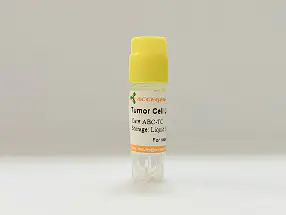
For research use only
| Cat No. | ABC-TC0999 |
| Product Type | Human Bladder Cancer Cell Lines |
| Cell Type | Epithelial |
| Species | Human |
| Growth Conditions | 37 ℃, 5% CO2 |
| Source Organ | Bladder |
| Product Code | RT112-84; RT-112/84; RT11284 |
RT-112/84 Bladder Carcinoma Cells grow slowly and support bladder tumor progression modeling, epithelial biology, and chemotherapy profiling.
RT112/84 is a human bladder transitional cell carcinoma (TCC) cell line, specifically a transitional cell carcinoma (also known as urothelial carcinoma), obtained from a patient with urinary tract cancer. The cells exhibit typical epithelial morphology with polygonal, cobblestone-like appearance and adherent growth properties. The line has a hyperdiploid to near-triploid karyotype, with multiple chromosomal abnormalities, including gains and losses frequently observed in bladder cancer such as chromosome 9 deletions (9p21-22). RT112/84 expresses urothelial markers like cytokeratin 7 and 20 and retains functional features including active FGFR3 signaling due to mutations common in low-grade papillary bladder cancers. The cell line forms tumors in immunocompromised mice and is moderately tumorigenic, serving as a model for non-muscle invasive bladder cancer (NMIBC).
| Product Code | RT112-84; RT-112/84; RT11284 |
| Species | Human |
| Cat.No | ABC-TC0999 |
| Product Category | Tumor Cell Lines |
| Size/Quantity | 1 vial |
| Cell Type | Epithelial |
| Growth Mode | Adherent |
| Shipping Info | Dry Ice |
| Growth Conditions | 37 ℃, 5% CO2 |
| Source Organ | Bladder |
| Biosafety Level | 1 |
| Storage | Liquid Nitrogen |
| Product Type | Human Bladder Cancer Cell Lines |
RT-112/84 cells offers valuable applications in cancer research, particularly in exploring cancer cell mechanisms of cancer cell invasion and metastasis. They are frequently used in tumorigenicity studies and are instrumental in evaluating the efficacy of anticancer agents. The cell line has been applied in cytotoxicity assays involving compounds such as lipoic acid and calcium hydroxycitrate, providing insights into potential therapeutic interventions. Its reproducible growth and tumor-forming capabilities make it a valuable platform for drug screening and mechanistic studies in urothelial carcinoma.
When you publish your research, please cite our product as “AcceGen Biotech Cat.# XXX-0000”. In return, we’ll give you a $200 coupon. Simply click here and submit your paper’s PubMed ID (PMID).