



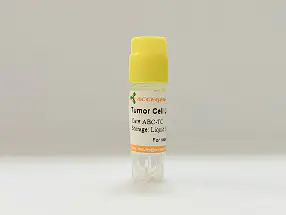
For research use only
| Cat No. | ABC-TC0015 |
| Product Type | Human Bladder Cancer Cell Lines |
| Cell Type | Epithelial |
| Species | Human |
| Growth Conditions | 37 ℃, 5% CO2 |
| Source Organ | Bladder |
| Disease | Bladder Cancer |
| Product Code | Cell 5637, 5637 cell |
5637 Cell line was established from the primary bladder carcinoma of a 68-year-old man in 1974.
5637 cell line is a human epithelial bladder carcinoma cell line derived in 1974 from a Grade II primary tumor of a 68-year-old Caucasian male. These cells exhibit classic epithelial morphology, growing as cobblestone monolayers. Cytogenetic profiling reveals aneuploid karyotype characteristic of urothelial tumors. 5637 robustly expresses urothelial markers such as cytokeratin and displays active DNA repair pathways. Transcriptomic and epigenomic analyses in 2023–2024 have confirmed subtype-specific transcription factor profiles, such as FOXA1, and implicate 5637 in luminal and basal bladder cancer programs. The line is tumorigenic in vivo, forms subcutaneous xenografts. The cells undergo rigorous screening and isolation procedures, and are rigorously tested to ensure they are free of contamination from HIV-1, HBV, HCV, Syphilis, Mycoplasma, Fungi, Yeast, and Bacteria.
| Product Code | Cell 5637, 5637 cell |
| Species | Human |
| Cat.No | ABC-TC0015 |
| Product Category | Tumor Cell Lines |
| Size/Quantity | 1 vial |
| Cell Type | Epithelial |
| Growth Mode | Adherent |
| Shipping Info | Dry Ice |
| Growth Conditions | 37 ℃, 5% CO2 |
| Source Organ | Bladder |
| Disease | Bladder Cancer |
| Biosafety Level | 1 |
| Storage | Liquid Nitrogen |
| Product Type | Human Bladder Cancer Cell Lines |
5637 cells are widely used in bladder cancer research for drug screening, DNA damage response assays, and identifying therapeutic targets. Recent studies (2023) have leveraged 5637 to assess apoptosis induction by compounds like Lobaplatin, showing modulation of Bcl-2, Bax, and PI3K/Akt pathways. Transcriptome profiling studies use 5637 to elucidate gene regulation in angiogenesis and migration. Additionally, it serves as a model in CAR-T cell research targeting TM4SF1 antigen in bladder carcinoma.
When you publish your research, please cite our product as “AcceGen Biotech Cat.# XXX-0000”. In return, we’ll give you a $200 coupon. Simply click here and submit your paper’s PubMed ID (PMID).