



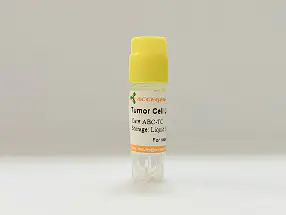
For research use only
| Cat No. | ABC-TC0004 |
| Product Type | Human Prostate Cancer Cell Lines |
| Cell Type | Epithelial |
| Species | Human |
| Growth Conditions | 37 ℃, 5% CO2 |
| Source Organ | Prostate |
| Disease | Prostate Cancer |
| Product Code | 22RV1; 22Rv-1; 22rV1; CWR-22rv1; CWR22-Rv1; CWR22R-V1; CWR22-R1; CWR22Rv1; CWR22R |
22Rv1. Human prostate carcinoma epithelial cell line from a xenograft. Used for prostate cancer research, androgen receptor studies, and drug testing.
22Rv1 is a human prostate epithelial carcinoma cell line derived from a relapsed xenograft of the androgen-dependent CWR22 tumor, serially passaged in castrated nude mice following tumor regression. The original tumor was isolated from a 63-year-old Caucasian male with prostate adenocarcinoma. 22Rv1 cells exhibit epithelial morphology and grow as adherent monolayers with tight cell-to-cell contacts. These cells express androgen receptor (AR) splice variants, and produce prostate-specific antigen (PSA). The karyotype is complex and aneuploid, with frequent structural abnormalities characteristic of advanced prostate cancer. 22Rv1 is tumorigenic in immunodeficient mice and forms prostate-like tumors with glandular morphology and invasive potential. The cells undergo rigorous screening and isolation procedures, and are rigorously tested to ensure they are free of contamination from HIV-1, HBV, HCV, Syphilis, Mycoplasma, Fungi, Yeast, and Bacteria.
| Product Code | 22RV1; 22Rv-1; 22rV1; CWR-22rv1; CWR22-Rv1; CWR22R-V1; CWR22-R1; CWR22Rv1; CWR22R |
| Species | Human |
| Cat.No | ABC-TC0004 |
| Product Category | Tumor Cell Lines |
| Size/Quantity | 1 vial |
| Cell Type | Epithelial |
| Growth Mode | Adherent |
| Shipping Info | Dry Ice |
| Growth Conditions | 37 ℃, 5% CO2 |
| Source Organ | Prostate |
| Disease | Prostate Cancer |
| Biosafety Level | 1 |
| Storage | Liquid Nitrogen |
| Product Type | Human Prostate Cancer Cell Lines |
| Host Cell | 4T1 |
22Rv1 cells serve as a critical model for studying castration-resistant prostate cancer (CRPC), particularly in exploring mechanisms of androgen receptor signaling, AR splice variant activity, and therapy resistance. They are widely used in drug screening, biomarker validation, and molecular studies of AR-driven tumor progression. Their partial androgen independence and AR-V7 expression make them highly relevant for evaluating novel anti-androgen therapies in advanced prostate cancer research.
When you publish your research, please cite our product as “AcceGen Biotech Cat.# XXX-0000”. In return, we’ll give you a $200 coupon. Simply click here and submit your paper’s PubMed ID (PMID).
Saranyutanon S, Deshmukh SK, Dasgupta S, Pai S, Singh S, Singh AP. Cellular and Molecular Progression of Prostate Cancer: Models for Basic and Preclinical Research. Cancers (Basel). 2020;12(9):2651. Published 2020 Sep 17. doi:10.3390/cancers12092651