




Tumor Cell Lines

59M

  • For research use only

Cat No.

ABC-TC0016

Product Type

Human Ovarian Cancer Cell Lines

Cell Type

Epithelial

Species

Human

Growth Conditions

37 ℃, 5% CO2

Source Organ

Ovary

Disease

Ovarian Serous Adenocarinoma

Product Code

OAW59M; OAW 59M; 59 M

Human ovarian tumour epithelial. Derived from a patient with carcinoma of the ovary and is of ascitic fluid origin.

Product Image

Description

59M is a human epithelial ovarian cancer cell line derived from ascitic fluid of a patient with ovarian carcinoma, first classified as a serous adenocarcinoma. These cells grow as adherent monolayers with typical cobblestone morphology and form multicellular spheroids under 3D conditionsl. Molecular profiling classifies 59M within a low-grade transcriptional subtype distinct from high-grad e serous lines and highlights dependency on metabolic pathways related to mitochondrial and glycolytic regulation. Genomic data confirm epithelial marker expression (e.g., cytokeratins) and maintain wild-type TP53. While 59M cells do not exhibit aggressive in vivo tumorigenicity, they recapitulate metastatic behaviors via 3D spheroid formation. The cells undergo rigorous screening and isolation procedures, and are rigorously tested to ensure they are free of contamination from HIV-1, HBV, HCV, Syphilis, Mycoplasma, Fungi, Yeast, and Bacteria.

Product Code

OAW59M; OAW 59M; 59 M

Species

Human

Cat.No

ABC-TC0016

Product Category

Tumor Cell Lines

Size/Quantity

1 vial

Cell Type

Epithelial

Growth Mode

Adherent

Shipping Info

Dry Ice

Growth Conditions

37 ℃, 5% CO2

Source Organ

Ovary

Disease

Ovarian Serous Adenocarinoma

Biosafety Level

1

Storage

Liquid Nitrogen

Product Type

Human Ovarian Cancer Cell Lines

Application

  • 59M serves as a valuable model for studying metabolic vulnerabilities and 3D growth behavior in ovarian adenocarcinoma. Recent studies (2024) demonstrate differential responses to microtubule inhibitor plocabulin, showing relative chemoresistance compared to other lines in vitro assays. This line is also used to explore metabolic pathway dependencies identified via CBM models, supporting functional genomics investigations into mitochondrial energy regulation and drug target discovery.

Citation

When you publish your research, please cite our product as “AcceGen Biotech Cat.# XXX-0000”. In return, we’ll give you a $200 coupon. Simply click here and submit your paper’s PubMed ID (PMID).

Quality Control Report

  • Test Item
  • Flow Cytometry
  • Result
  • P30/OHK (NC) 59M

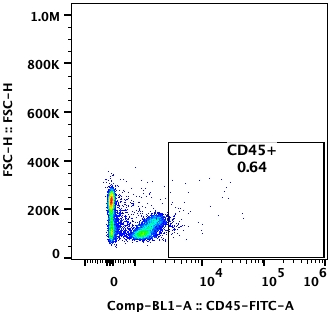
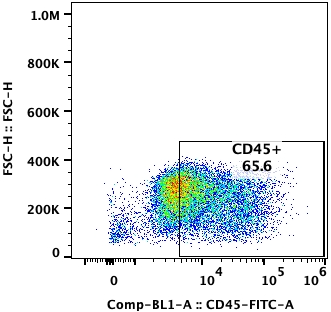
    Flow cytometry plot of P30/OHK (NC), showing CD45 expression to be 0.64%.Flow cytometry plot of 59M, showing CD45 expression to be 65.6%.

    The percentage of CD45 expression in 59M Cell Line was detected by flow cytometry to be approximately 65.6%.

Frequently Asked Questions

  • What is the recommended seeding density for 59M cells?

    The recommended seeding density for 59M cells can vary depending on the specific experimental needs and growth characteristics. As a general guideline:

    Initial Seeding Density: Start with a seeding density of around 5,000 to 10,000 cells per square centimeter (cells/cm²) of growth area. Adjust based on the growth rate and experimental requirements.

  • What is the recommended culture medium and conditions for 59M cells?

    Recommended Culture Medium and Conditions for 59M Cells:
    Culture Medium: 59M cells are typically cultured in RPMI-1640 medium supplemented with fetal bovine serum (FBS), usually at a concentration of 10% to 20%. Antibiotics such as penicillin-streptomycin are commonly added to prevent contamination.

    Temperature and Atmosphere: Maintain the cells at 37°C in a humidified atmosphere containing 5% CO₂. This environment helps to mimic physiological conditions and supports cell growth.

  • What are common issues encountered with 59M cell culture and how can I troubleshoot them?

    Poor Cell Attachment: Ensure that culture vessels are properly coated with extracellular matrix proteins (e.g., collagen, fibronectin) before seeding. Also, avoid over-trypsinization during passaging, as excessive trypsin can damage cell membranes and affect attachment.

    Slow Growth or Reduced Viability: Check the freshness and quality of the medium and FBS used. Serum should be heat-inactivated to minimize the risk of viral contamination. Ensure that cells are not over-confluent and are regularly subcultured to maintain active growth.

    Contamination: Maintain strict aseptic techniques, including frequent cleaning of the work area and equipment. Use antibiotics judiciously to prevent bacterial or fungal contamination.

    pH Imbalance: Monitor the pH of the medium regularly and adjust if necessary to maintain optimal conditions for cell growth (typically pH 7.2-7.4).

  • How do I cryopreserve and thaw 59M cells while maintaining their viability and functionality?

    Cryopreservation and Thawing of 59M Cells:
    Cryopreservation:

    Preparation: Use a freezing medium containing RPMI-1640 supplemented with 10-20% FBS and 10% dimethyl sulfoxide (DMSO). DMSO helps prevent ice crystal formation during freezing, which can damage cells.

    Freezing Protocol:

    Harvest cells during exponential growth phase.
    Resuspend cells in the freezing medium at a concentration of 1-2 million cells per mL.
    Transfer aliquots of the cell suspension to cryovials.
    Place cryovials in a controlled-rate freezer or a -80°C freezer for slow freezing.
    Transfer cryovials to liquid nitrogen for long-term storage (below -130°C).
    Thawing:

    Thawing Protocol:
    Quickly thaw cryovials in a 37°C water bath until only a small ice crystal remains.
    Transfer the cell suspension to a tube containing pre-warmed RPMI-1640 medium with FBS (10-20%).
    Centrifuge cells at low speed to pellet them, remove the supernatant, and resuspend cells in fresh medium.
    Plate cells in culture vessels pre-coated with appropriate matrix proteins and incubate in a 37°C, 5% CO₂ atmosphere.

Inquiring 59M

We know how valuable your research is to you, but are you wondering what you can expect to pay for quick accurate results every time? Fill out a request in the form below and we’ll get back to you within 24 hours with a quote.
High Viability
To succeed in cell culture
Precision and Reliability
To support a consistent result
Customization Options
Tailed to your research

Tags

AcceGen Scroll Top Button