



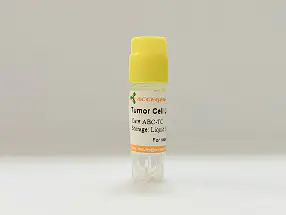
For research use only
| Cat No. | ABC-TC0026 |
| Product Type | Human Melanoma Cell Lines |
| Cell Type | Epithelial |
| Species | Human |
| Growth Conditions | 37 ℃, 5% CO2 |
| Source Organ | Skin |
| Disease | Malignant Melanoma |
| Product Code | A 375; A-375; A375-MEL; A375-mel; A375mel |
This line was derived from a 54 year old female with malignant melanoma.
A375 cell line is a human malignant melanoma cell line established from a 54-year-old female patient. It displays epithelial-like, cobblestone morphology with a hypotriploid karyotype (~62 chromosomes) and forms adherent monolayers. A375 cells harbor BRAF V600E mutation and express melanoma markers such as MITF and tyrosinase. They exhibit high baseline motility and invasiveness, particularly in assays comparing pigmented versus amelanotic melanoma lines. Metabolic profiling reveals a melanocytic state characterized by increased lipid droplet accumulation and fatty acid oxidation, representing a metabolic vulnerability. A375 also demonstrates drug-tolerant persister states with altered phospholipid and amino acid metabolism, including elevated lactic acid consumption following vemurafenib exposure. The cells undergo rigorous screening and isolation procedures, and are rigorously tested to ensure they are free of contamination from HIV-1, HBV, HCV, Syphilis, Mycoplasma, Fungi, Yeast, and Bacteria.
| Product Code | A 375; A-375; A375-MEL; A375-mel; A375mel |
| Species | Human |
| Cat.No | ABC-TC0026 |
| Product Category | Tumor Cell Lines |
| Size/Quantity | 1 vial |
| Cell Type | Epithelial |
| Growth Mode | Adherent |
| Shipping Info | Dry Ice |
| Growth Conditions | 37 ℃, 5% CO2 |
| Source Organ | Skin |
| Disease | Malignant Melanoma |
| Biosafety Level | 1 |
| Storage | Liquid Nitrogen |
| Product Type | Human Melanoma Cell Lines |
A375 cells are a versatile model for studying melanoma biology, including BRAF-targeted therapies, metabolic reprogramming, and immunometabolism. They have been used to investigate inhibitors like ranolazine that target fatty acid oxidation to overcome BRAF inhibitor resistance, and to assess the effects of quercetin and luteolin via GPER-mediated apoptosis and cell cycle arrest. Additionally, A375 is used to study YB-1 biomarker expression, actin polymerization dynamics mediated by tyrosinase, and radiomic-transcriptomic integration in diagnostic AI pipelines.
When you publish your research, please cite our product as “AcceGen Biotech Cat.# XXX-0000”. In return, we’ll give you a $200 coupon. Simply click here and submit your paper’s PubMed ID (PMID).