



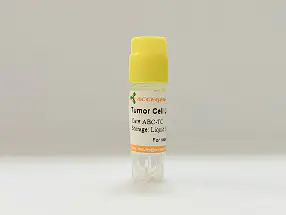
Tumor Cell Lines

ACHN

  • For research use only

Cat No.

ABC-TC0038

Product Type

Human Kidney Cancer Cell Lines

Cell Type

Epithelial

Species

Human

Growth Conditions

37 ℃, 5% CO2

Source Organ

Kidney

Disease

Adenocarinoma

Product Code

ACHN cell, ACHN cell line

ACHN Renal Adenocarcinoma Cells are pleural effusion-derived and support renal cancer studies, IFN response, and drug resistance mechanisms.

Product Image

Description

ACHN cell line is human epithelial tumor cell line derived from the pleural effusion of a 22-year-old male patient diagnosed with metastatic renal adenocarcinoma. The cell line exhibits adherent growth with epithelial-like morphology and forms cobblestone-shaped monolayers under standard culture conditions. ACHN cells are particularly valuable for studying metastatic processes, as they originated from a secondary tumor site while retaining characteristics of primary renal carcinoma. Karyotypic analyses reveal complex chromosomal abnormalities associated with renal cell carcinoma, including loss of 3p and gain of 5q regions. ACHN expresses epithelial markers and demonstrates responsiveness to growth-inhibitory effects of human interferons. The line is tumorigenic in immunodeficient mice and widely used in metastasis modeling, drug testing, and cytokine signaling research. The cells undergo rigorous screening and isolation procedures, and are rigorously tested to ensure they are free of contamination from HIV-1, HBV, HCV, Syphilis, Mycoplasma, Fungi, Yeast, and Bacteria.

Product Code

ACHN cell, ACHN cell line

Species

Human

Cat.No

ABC-TC0038

Product Category

Tumor Cell Lines

Size/Quantity

1 vial

Cell Type

Epithelial

Growth Mode

Adherent

Shipping Info

Dry Ice

Growth Conditions

37 ℃, 5% CO2

Source Organ

Kidney

Disease

Adenocarinoma

Biosafety Level

1

Storage

Liquid Nitrogen

Product Type

Human Kidney Cancer Cell Lines

Application

  • ACHN is widely used as a model for studying metastatic renal cell carcinoma (RCC), providing insights into tumor progression, epithelial-to-mesenchymal transition (EMT), and drug response mechanisms. Its origin from a metastatic pleural lesion makes it ideal for in vitro and in vivo modeling of RCC dissemination. ACHN is also valuable in evaluating cytokine signaling, particularly interferon-mediated antiproliferative effects. Researchers commonly use this line in compound screening, immunotherapy development, and angiogenesis-related studies. Its genetic and phenotypic stability supports consistent assay performance in preclinical and translational research targeting advanced kidney cancers and therapy resistance mechanisms.

Citation

When you publish your research, please cite our product as “AcceGen Biotech Cat.# XXX-0000”. In return, we’ll give you a $200 coupon. Simply click here and submit your paper’s PubMed ID (PMID).

Inquiring ACHN

We know how valuable your research is to you, but are you wondering what you can expect to pay for quick accurate results every time? Fill out a request in the form below and we’ll get back to you within 24 hours with a quote.
High Viability
To succeed in cell culture
Precision and Reliability
To support a consistent result
Customization Options
Tailed to your research

Tags

AcceGen Scroll Top Button