



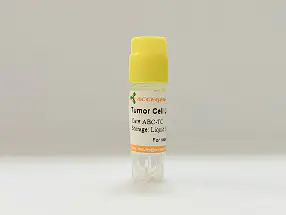
For research use only
| Cat No. | ABC-TC0054 |
| Product Type | Rat Cancer Cell Lines |
| Cell Type | Epithelial-like |
| Species | Rat-Copenhagen Rats |
| Growth Conditions | 37 ℃, 5% CO2 |
| Source Organ | Ventral Prostate |
| Disease | AdenoCarcinoma |
| Product Code | R-3327-AT-2.1; AT2.1; Dunning AT2.1 |
AT-2.1 is a prostate carcinoma cell line with low metastatic potential, ideal for prostate cancer research, tumor progression analysis, and drug screening.
AT-2.1 cell line is a non-metastatic epithelial-like prostate carcinoma cell line derived from the ventral prostate of Copenhagen rats in the Dunning R-3327 transplantable tumor system. This subline represents a low-grade, androgen-sensitive tumor variant and demonstrates slow tumor growth in vivo. AT-2.1 cells exhibit polygonal morphology and adhere in monolayer in vitro. Histologically, the tumors are well-differentiated adenocarcinomas that retain prostate-specific secretory activity, including expression of androgen receptor and prostate-specific markers. Cytogenetic analyses reveal moderate aneuploidy and preservation of rat-specific chromosomal features. The cells are rigorously tested to ensure they are free of contamination from mycoplasma, fungi, yeast, and bacteria, ensuring biosafety for in vitro and in vivo prostate cancer research. The cells undergo rigorous screening and isolation procedures, and are rigorously tested to ensure they are free of contamination from Mycoplasma, Fungi, Yeast, and Bacteria.
| Product Code | R-3327-AT-2.1; AT2.1; Dunning AT2.1 |
| Species | Rat-Copenhagen Rats |
| Cat.No | ABC-TC0054 |
| Product Category | Tumor Cell Lines |
| Size/Quantity | 1 vial |
| Cell Type | Epithelial-like |
| Growth Mode | Adherent |
| Shipping Info | Dry Ice |
| Growth Conditions | 37 ℃, 5% CO2 |
| Source Organ | Ventral Prostate |
| Disease | AdenoCarcinoma |
| Biosafety Level | 1 |
| Storage | Liquid Nitrogen |
| Product Type | Rat Cancer Cell Lines |
AT-2.1 cell line serves as a preclinical model for studying androgen-sensitive, low-metastatic prostate cancer. It is ideal for evaluating the effects of hormonal therapies, such as androgen deprivation or receptor blockade, and is widely used in contrast with metastatic Dunning sublines to study molecular events driving progression. AT-2.1 supports research in tumor immunology, stromal-epithelial interactions, and differentiation regulation within the prostate microenvironment. Its reproducible in vivo tumor growth in Copenhagen rats and lack of spontaneous metastasis make it suitable for localized prostate cancer models. The cell line is employed in studies of tumor grading, gene expression analysis, and early-stage prostate adenocarcinoma therapeutics.
When you publish your research, please cite our product as “AcceGen Biotech Cat.# XXX-0000”. In return, we’ll give you a $200 coupon. Simply click here and submit your paper’s PubMed ID (PMID).