



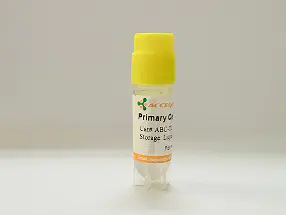
For research use only
| Cat No. | ABC-TC3055 |
| Product Type | Mouse Primary Cells |
| Cell Type | Fibroblast |
| Species | BALB/c Mouse |
| Growth Conditions | 37 ℃, 5% CO2 |
| Source Organ | Aortic |
| Disease | Normal |
| Storage | Liquid Nitrogen |
BALB/c Mouse Primary Aortic Fibroblasts from AcceGen are isolated from tissue of pathogen-free laboratory mice.
BALB/c Mouse Aortic Fibroblasts are primary cells isolated from the aortic tissue of BALB/c mice. These fibroblasts exhibit a spindle-shaped morphology and adhere tightly to culture surfaces. As key structural components of the aortic wall, aortic fibroblasts play essential roles in extracellular matrix (ECM) synthesis, collagen turnover, and vascular remodeling. Under pathological conditions such as hypertension or atherosclerosis, they can transdifferentiate into myofibroblasts, contributing to vascular stiffening and fibrosis. These cells are typically characterized by expression of vimentin and α-SMA, and they respond to mechanical stress and cytokine signaling. The cells are cryopreserved at early passage and have limited proliferative capacity in vitro. They play a key role in vascular remodeling and fibrosis under pathological stimuli. Each lot undergoes rigorous screening and isolation procedures, and is rigorously tested to ensure it is free of contamination from Mycoplasma, Fungi, Yeast, and Bacteria.
| Product Code | BALB/c Mouse Aortic Fibroblasts, BALB c aortic fibroblasts, Mouse aortic fibroblasts BALB/c |
| Species | BALB/c Mouse |
| Cat.No | ABC-TC3055 |
| Product Category | Primary Cells |
| Size/Quantity | 1 vial |
| Cell Type | Fibroblast |
| Growth Mode | Adherent |
| Shipping Info | Dry Ice |
| Growth Conditions | 37 ℃, 5% CO2 |
| Source Organ | Aortic |
| Disease | Normal |
| Biosafety Level | 1 |
| Storage | Liquid Nitrogen |
| Product Type | Mouse Primary Cells |
| Quality Control | All cells test negative for mycoplasma, bacteria, yeast, and fungi. |
BALB/c Mouse Aortic Fibroblasts serve as a robust in vitro model for studying vascular fibrosis, ECM remodeling, and fibroblast-to-myofibroblast transition. They are particularly useful for dissecting molecular mechanisms underlying aortic stiffening and evaluating anti-fibrotic therapeutics in cardiovascular disease research. Additionally, these cells provide a platform to investigate aortic repair through fibroblasts in BALB/c models, including interactions between endothelial cells and adventitial fibroblasts during tissue remodeling. Their responsiveness to mechanical stress and profibrotic cytokines makes them valuable for investigating signaling pathways involved in vascular remodeling and fibrosis progression.
When you publish your research, please cite our product as “AcceGen Biotech Cat.# XXX-0000”. In return, we’ll give you a $200 coupon. Simply click here and submit your paper’s PubMed ID (PMID).