



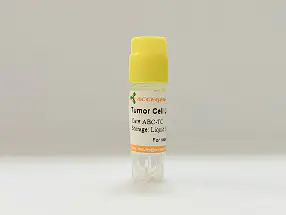
Tumor Cell Lines

BC3H1

  • For research use only

Cat No.

ABC-TC0071

Product Type

Mouse Brain Cancer Cell Lines

Species

Mouse

Growth Conditions

37 ℃, 5% CO2

Source Organ

Brain

Disease

Neoplasms

Product Code

BC3 H1; BC3H-1; BC-3H-1; BC-3-H-I

Recent data suggest that BC3H1 cells may more closely resemble cells in an arrested state of skeletal muscle differentiation than smooth muscle cells

Product Image

Description

BC3H1 is a murine tumor-derived cell line originating from an N-ethyl-N-nitrosourea-induced intracranial neoplasm in a C3H mouse. The cells exhibit an adherent, fibroblast-like morphology with two distinct shapes: flattened monolayers and spheroidal clusters. Although the tumor arose in smooth-muscle-like tissue, BC3H1 cells display both transcriptional and protein signatures of the skeletal muscle lineage and are arrested prior to terminal differentiation. Chromosomal analysis reveals a near-tetraploid karyotype (~74-82 chromosomes) with occasional fusion markers. Additionally, BC3H1 expresses muscle-contraction components, including acetylcholine receptors, creatine phosphokinase, adenylate phosphokinase, tropomyosin, and myosin heavy/light chains. These cells are cryopreserved at an early passage. The cells undergo stringent screening and testing procedures to ensure they are free from contamination by Mycoplasma, fungi, yeast, and bacteria.

Product Code

BC3 H1; BC3H-1; BC-3H-1; BC-3-H-I

Species

Mouse

Cat.No

ABC-TC0071

Product Category

Tumor Cell Lines

Size/Quantity

1 vial

Growth Mode

Adherent

Shipping Info

Dry Ice

Growth Conditions

37 ℃, 5% CO2

Source Organ

Brain

Disease

Neoplasms

Biosafety Level

1

Storage

Liquid Nitrogen

Product Type

Mouse Brain Cancer Cell Lines

Application

  • BC3H1 myogenic cells serve as a robust in vitro model for studying muscle differentiation, intracellular signaling pathways, and contractile protein expression. They are widely employed in investigations of acetylcholine receptor regulation, myokinase (adenylate kinase) and creatine kinase activity, and cAMP-mediated differentiation mechanisms. Their unique arrest in differentiation makes them ideal for assays probing myogenic commitment, muscle signal transduction, and drug screening for neuromuscular modulation.

Citation

When you publish your research, please cite our product as “AcceGen Biotech Cat.# XXX-0000”. In return, we’ll give you a $200 coupon. Simply click here and submit your paper’s PubMed ID (PMID).

Inquiring BC3H1

We know how valuable your research is to you, but are you wondering what you can expect to pay for quick accurate results every time? Fill out a request in the form below and we’ll get back to you within 24 hours with a quote.
High Viability
To succeed in cell culture
Precision and Reliability
To support a consistent result
Customization Options
Tailed to your research

Tags

AcceGen Scroll Top Button