



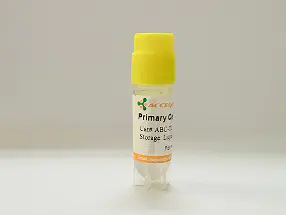
For research use only
| Cat No. | ABC-H0071X |
| Product Type | Canine Primary Cells |
| Cell Type | Monocyte |
| Species | Canine |
| Growth Conditions | 37 ℃, 5% CO2 |
| Disease | Normal |
| Storage | Liquid Nitrogen |
Beagle Canine PBMCs support veterinary immunology modeling, lymphocyte activation analysis, and cytokine profile evaluation in canine systems.
Beagle Canine Peripheral Blood Mononuclear Cells (Beagle PBMC) are isolated from healthy, purpose-bred Beagle dogs, a gold-standard model for preclinical toxicology and immunology research. These PBMCs contain characteristic canine lymphocyte populations (CD3⁺ T cells, CD21⁺ B cells) along with monocytes (CD14⁺), maintaining species-specific immune marker expression and functionality. These cells participate in both innate and adaptive immune responses. The cells exhibit robust proliferative responses to mitogens (ConA, PHA) and retain typical canine cytokine production profiles (IL-2, IFN-γ, IL-6). Beagle PBMCs are particularly valuable for comparative immunology studies due to their closer phylogenetic relationship to humans compared to rodents. These beagle PBMCs, when analyzed alongside full blood Beagle or beagle whole blood samples, provide a comprehensive framework for evaluating systemic immune responses and translational immunotoxicity assessments.
| Product Code | Beagle Canine Peripheral Blood Mononuclear Cells, Beagle Dog PBMCs, Canine PBMC Beagle, Dog Peripheral Blood Mononuclear Cells, Beagle Blood Lymphocytes |
| Species | Canine |
| Cat.No | ABC-H0071X |
| Product Category | Primary Cells |
| Size/Quantity | 1 vial |
| Cell Type | Monocyte |
| Growth Mode | Suspension |
| Shipping Info | Dry Ice |
| Growth Conditions | 37 ℃, 5% CO2 |
| Disease | Normal |
| Biosafety Level | 1 |
| Storage | Liquid Nitrogen |
| Product Type | Canine Primary Cells |
| Quality Control | All cells test negative for mycoplasma, bacteria, yeast, and fungi. |
Beagle Canine PBMCs are extensively used in safety assessment studies for pharmaceuticals and biologics, particularly for immunotoxicity evaluation required by regulatory agencies. These cells serve as critical tools for veterinary vaccine development and efficacy testing, providing canine-specific immune response data. Researchers utilize them for comparative studies of infectious diseases including leishmaniasis and distemper virus infection. Additionally, they are valuable for investigating autoimmune disorders and developing novel immunotherapies for canine cancers, bridging the gap between rodent models and human clinical trials.
When you publish your research, please cite our product as “AcceGen Biotech Cat.# XXX-0000”. In return, we’ll give you a $200 coupon. Simply click here and submit your paper’s PubMed ID (PMID).