
For research use only
| Cat No. | ABC-TC3147 |
| Product Type | Mouse Primary Cells |
| Cell Type | Heart Cell |
| Species | C57BL/10J Mouse |
| Growth Conditions | 37 ℃, 5% CO2 |
| Source Organ | Heart |
| Disease | Normal |
| Storage | Liquid Nitrogen |
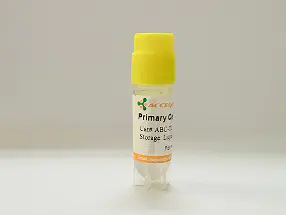
Mouse primary cardiac cells (MPCACs) are isolated from tissue of pathogen-free laboratory mice.
C57BL/10J Mouse Heart Cells are mainly derived from the heart tissue of C57BL/10J mice. These cells are morphologically diverse, including rod-shaped cardiomyocytes, star-shaped fibroblasts, and endothelial-like cells. Cardiomyocytes usually have obvious striated structures and regular contractility, while fibroblasts are long spindle-shaped or irregular polygonal and have strong wall-attached growth characteristics. In culture, these cells form intercellular connections and maintain structural and functional interactions characteristic of cardiac tissue. Functionally, they participate in processes such as cardiac contraction, electrical signal transduction, extracellular matrix remodeling, and injury repair. These cells contribute to heart cell signaling pathways C57BL/10J, illustrate the role of heart cells in C57BL/10J, and provide insights for C57BL/10J heart cell research and C57BL/10J cardiac phenotype analysis. The cells undergo rigorous screening and isolation procedures, and are rigorously tested to ensure they are free of contamination from Mycoplasma, Fungi, Yeast, and Bacteria.
| Product Code | C57BL/10J Mouse Heart Cells, C57BL/10J HC, B10J Cardiac Cells, C57BL10J Heart Cells |
| Species | C57BL/10J Mouse |
| Cat.No | ABC-TC3147 |
| Product Category | Primary Cells |
| Size/Quantity | 1 vial |
| Cell Type | Heart Cell |
| Growth Mode | Adherent |
| Shipping Info | Dry Ice |
| Growth Conditions | 37 ℃, 5% CO2 |
| Source Organ | Heart |
| Disease | Normal |
| Biosafety Level | 1 |
| Storage | Liquid Nitrogen |
| Product Type | Mouse Primary Cells |
| Quality Control | All cells test negative for mycoplasma, bacteria, yeast, and fungi. |
C57BL/10J Mouse Heart Cells can be used to explore basic physiological processes such as myocardial contraction and electrical signal conduction, helping to reveal the normal functioning mechanism of the heart. These cells also serve as a model to study cardiac cellular responses, intercellular interactions, and physiological regulation under experimental conditions.
When you publish your research, please cite our product as “AcceGen Biotech Cat.# XXX-0000”. In return, we’ll give you a $200 coupon. Simply click here and submit your paper’s PubMed ID (PMID).